14 hr
Meteora Monasteries Day Tour from Athens
- Expert local guide
- Small group
- Skip-the-line access
- Free cancellation
Meteora Day Trip From Athens — Monastery Access & Guided Excursions
Six Byzantine sanctuaries suspended on sandstone pillars, four hours north of the capital
Compare fares, pick the fit — all bookings are mobile-voucher and eligible for free cancellation where shown.
14 hr
14 hr
14 hr
| Experience | From | Duration | Rating | Skip-the-line | Guide | Small group | Price | |
|---|---|---|---|---|---|---|---|---|
|
Guided Experience
Most popular
Meteora Monasteries Day Tour from Athens
|
Athens | 14 hr | ★ 4.7 | ✓ | ✓ | ✓ | €84 | Book → |
|
Guided Experience
Meteora Monasteries Day Trip from Athens with Caves & Lunch
|
Athens | 14 hr | ★ 4.8 | ✓ | ✓ | ✓ | €75 | Book → |
|
Guided Experience
Meteora Monasteries Day Trip from Athens with Beachfront Stops
|
Athens | 14 hr | ★ 4.7 | ✓ | ✓ | ✓ | €84 | Book → |
Worth it if scenery justifies 14 hours total
A meteora day trip from athens delivers breathtaking clifftop monasteries and rock formations, but the logistics are demanding. Most tours depart Athens around 07:30 and return near midnight, with roughly 4.5 hours of highway driving each way. You'll visit two to three active monasteries—each charging a 5 EUR conservation fee—and spend approximately three hours on site. The UNESCO World Heritage rock pillars and Byzantine frescoes are undeniably spectacular, yet the actual exploration window is compressed. Guided tours simplify navigation and provide context about monastic life and the geology of the Pindus foothills. If dramatic landscapes and spiritual heritage resonate with you, the trade-off works. For travelers seeking a relaxed pace or those who prefer urban sightseeing, the extended bus time may outweigh the payoff. Families with young children should consider the early start and late return before booking meteora day trip from athens tours.
Bottom line: Book if clifftop monasteries and dramatic scenery justify a full day in transit; skip if you value time over spectacle.
They complement each other, but most visitors who prioritize a seamless schedule call Delphi the more manageable day trip, while Meteora is widely considered the more visually striking adventure.
|
Top pick Meteora |
Delphi | |
|---|---|---|
| Distance from Athens | ~350–400 km | ~180 km |
| Typical travel time | 4–5 hours each way | 2.5–3 hours each way |
| Main appeal | Byzantine monasteries on cliffs | Ancient sanctuary of Apollo |
| Best for | Spiritual views and photography | Mythology and history enthusiasts |
| Recommended duration | 2 days (overnight) | 1 day |
| Ease of day trip | Exhausting, long travel | Comfortable, well-supported |
| UNESCO site | ||
| See tickets & prices |
Verdict: Choose the Meteora day trip from athens if you crave dramatic landscapes and are willing to endure a long transit, or opt for Delphi if you prefer deeper historical exploration with significantly less time spent on the road.
Hand-picked experiences loved by thousands of travelers
14 hours
Free Cancellation
Journey by rail to Greece's dramatic clifftop monasteries and ancient hermit caves in Thessaly
14 hours
Free Cancellation
Journey to UNESCO-listed Meteora to discover ancient monasteries perched atop dramatic rock pillars
14 hours
Free Cancellation
Discover six clifftop monasteries and enter three on this intimate small-group journey through a UNESCO World Heritage landscape.
14 hours
Free Cancellation
Full-day journey to Greece's iconic clifftop monasteries with live Spanish commentary and lunch
2 days
Free Cancellation
Discover ancient clifftop monasteries and stunning rock formations on this immersive overnight escape
14 hours
Free Cancellation
Journey to UNESCO-listed Meteora's clifftop monasteries with coastal stops, cave exploration, and expert guidance
2 days
Free Cancellation
Journey to Greece's stunning rock monasteries with guided tours, hermit caves, sunset views, and overnight stay
12 hours
Free Cancellation
Discover ancient cliffside monasteries on a private journey to UNESCO-listed Meteora from Athens or Piraeus
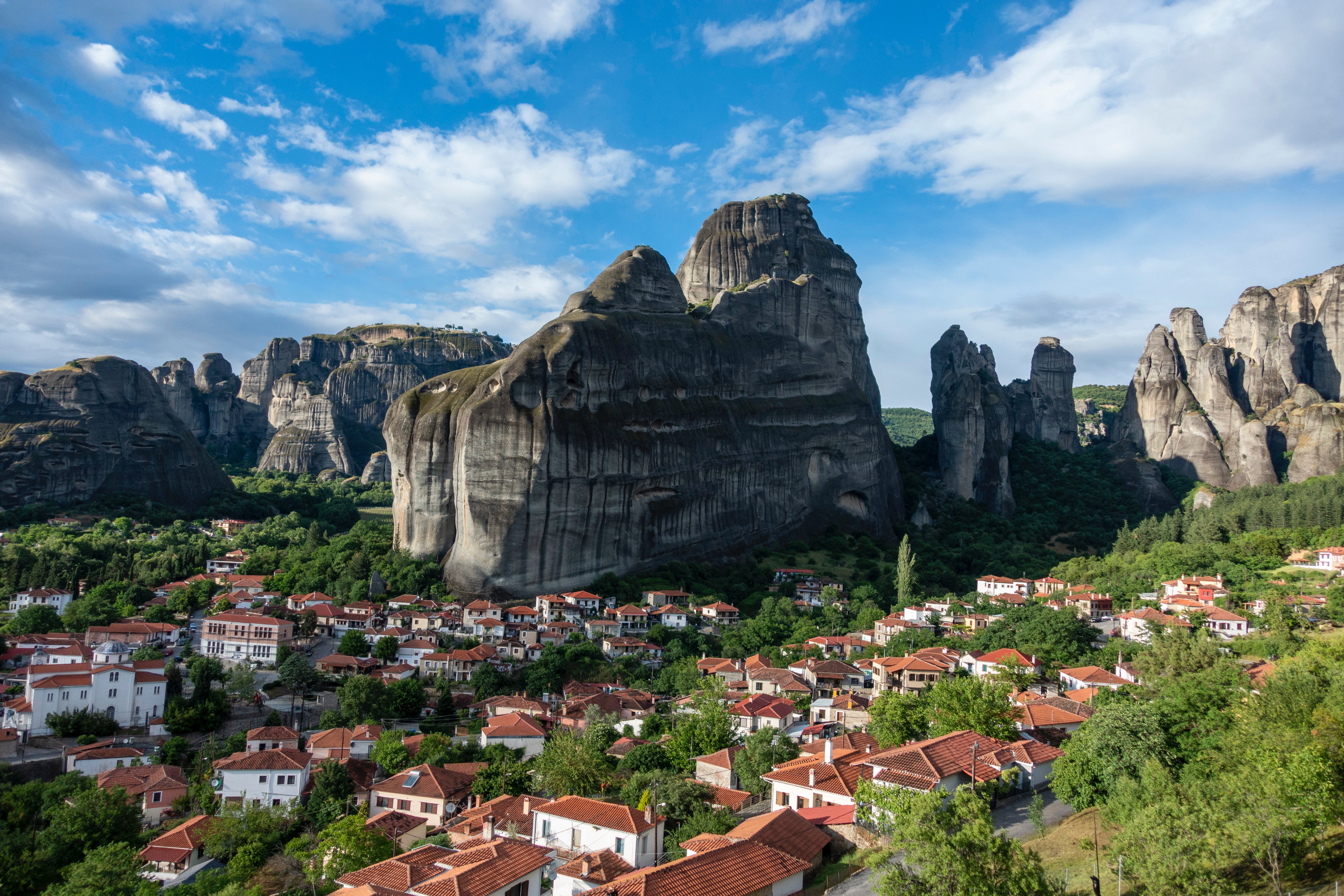
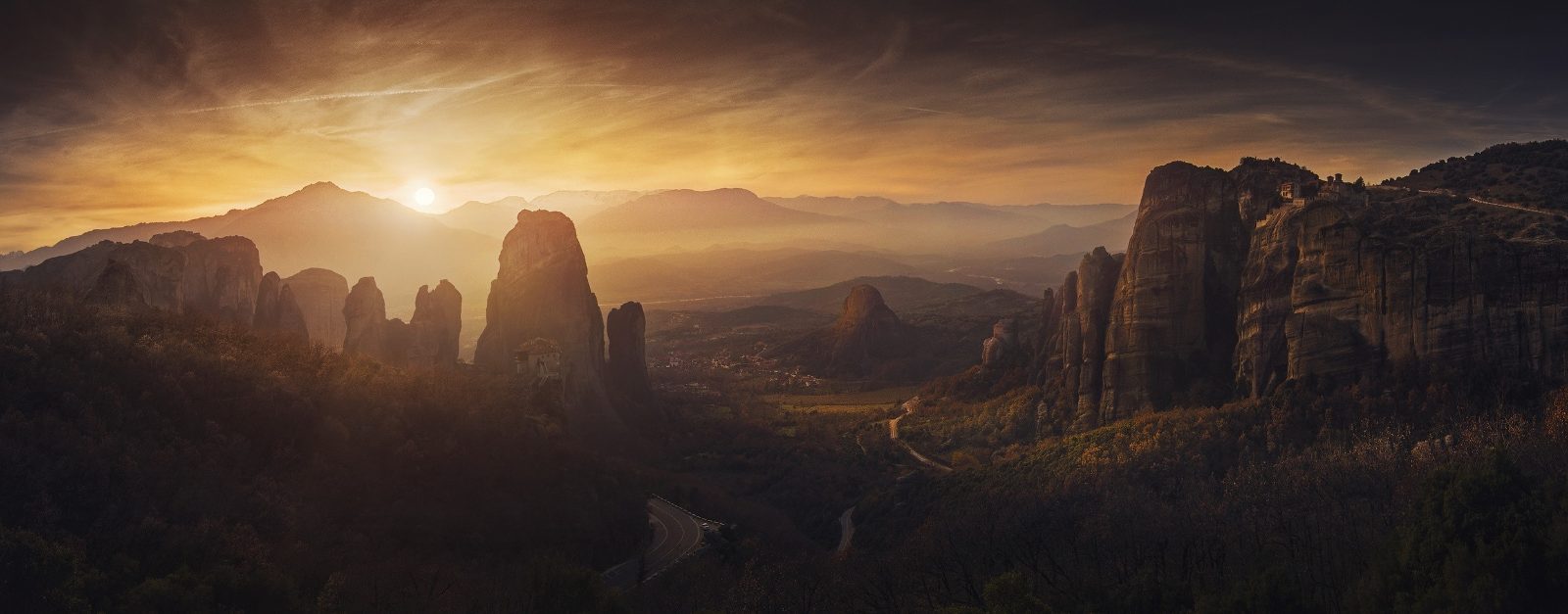
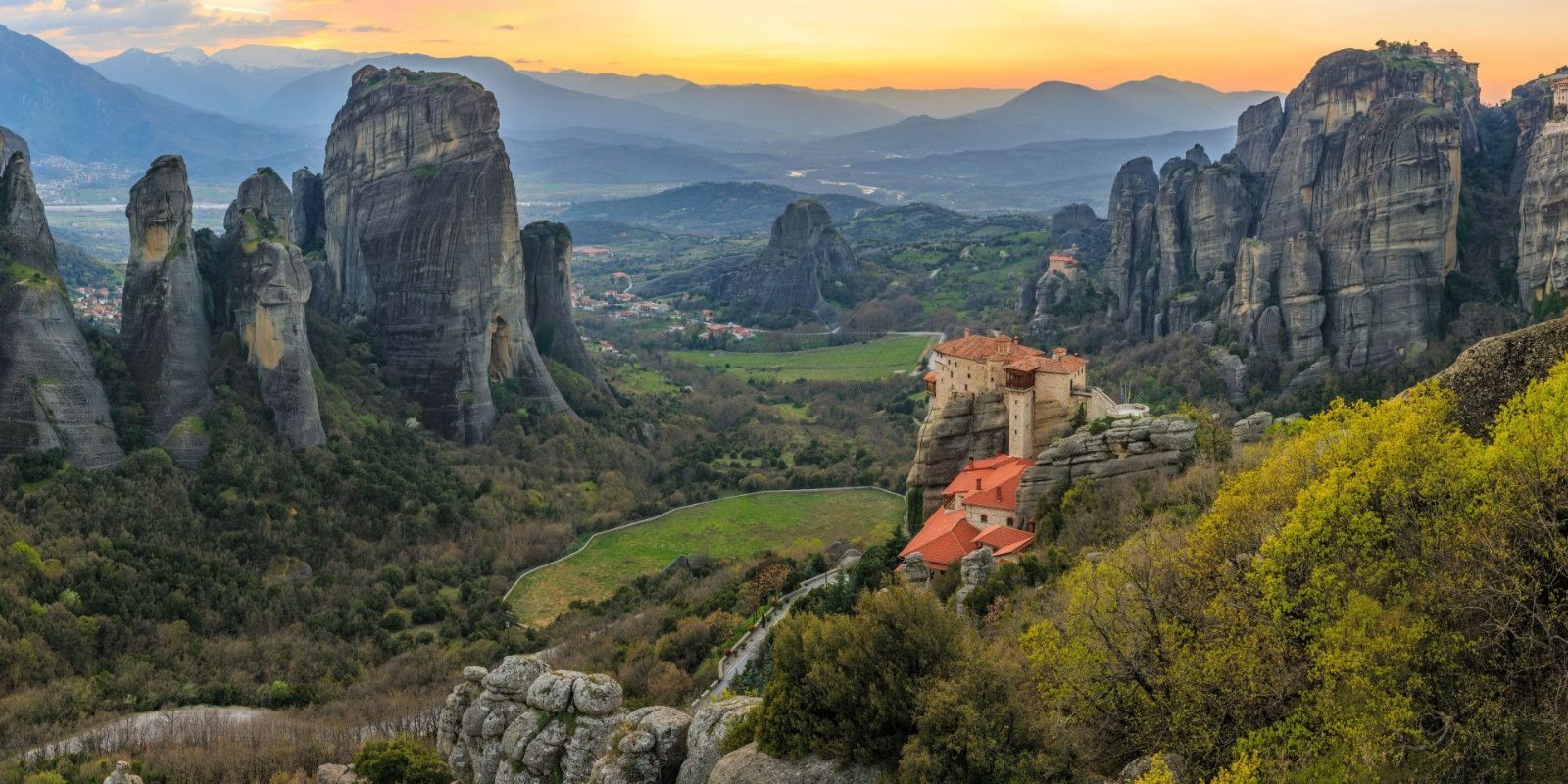
You board a climate-controlled coach in central Athens before dawn, the highway stretching north through Thebes and Lamia as the sun rises over the Pindus foothills. Four hours later, the sandstone pillars of Meteora appear on the horizon, their vertical faces striped with iron oxide and lichen.
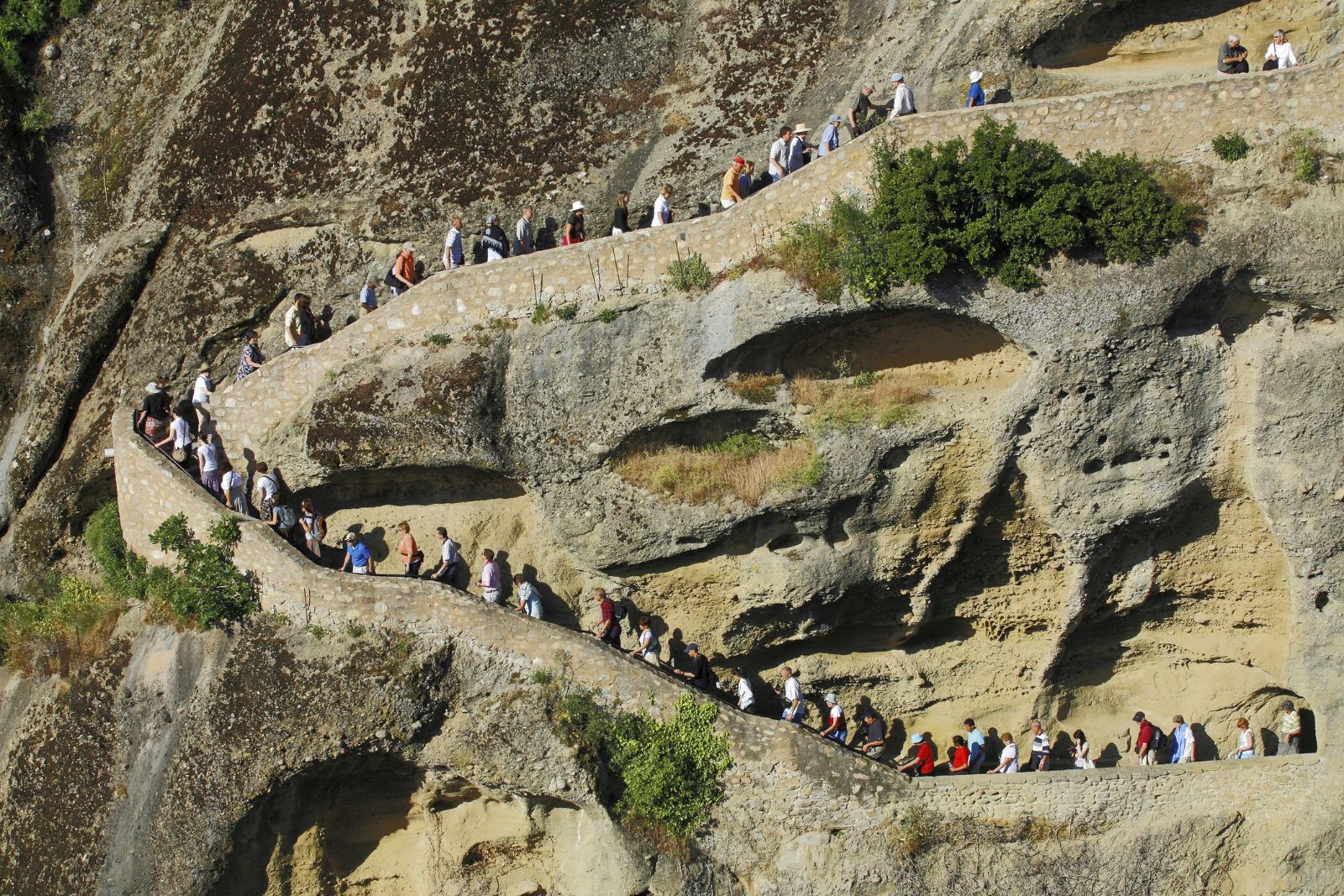
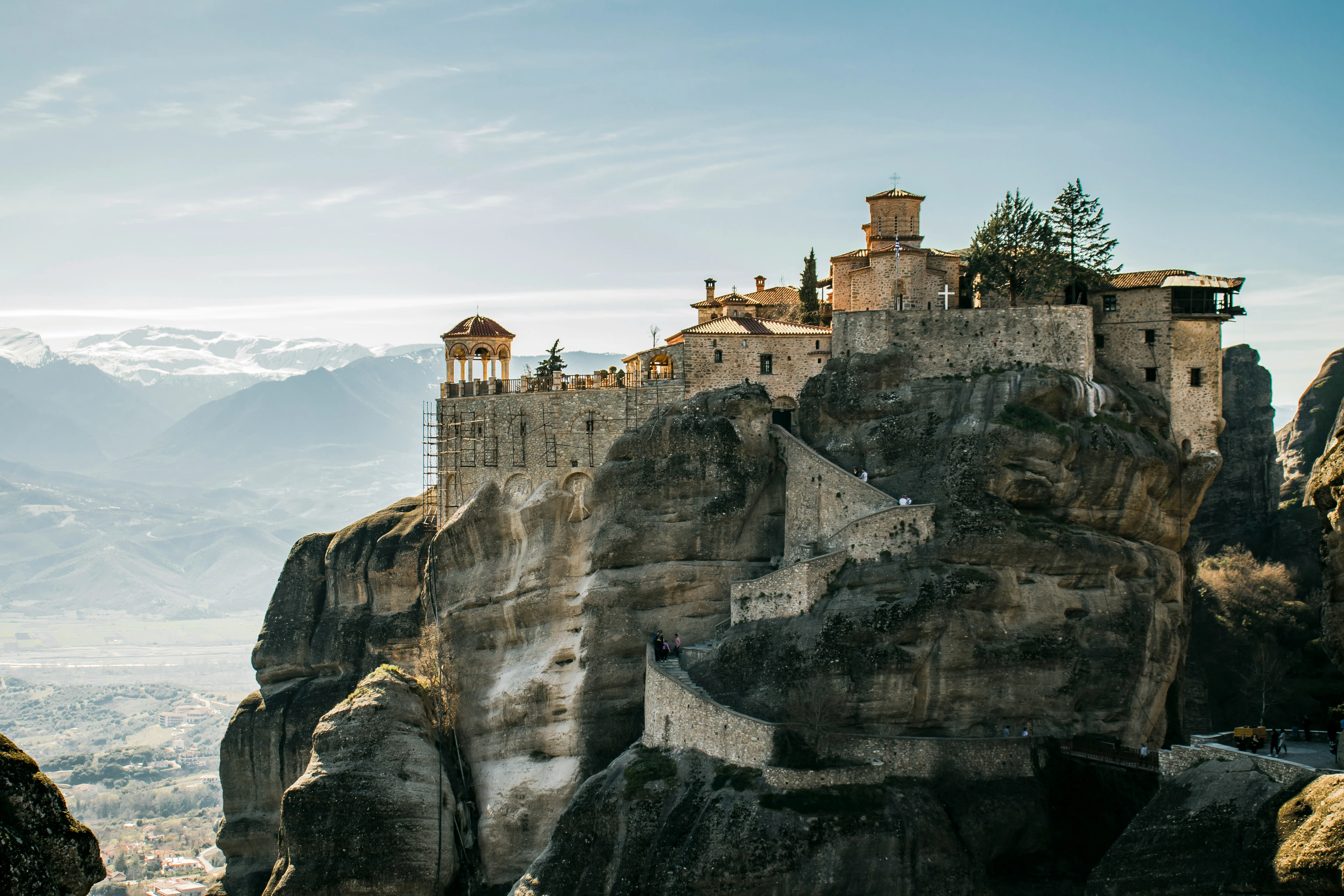
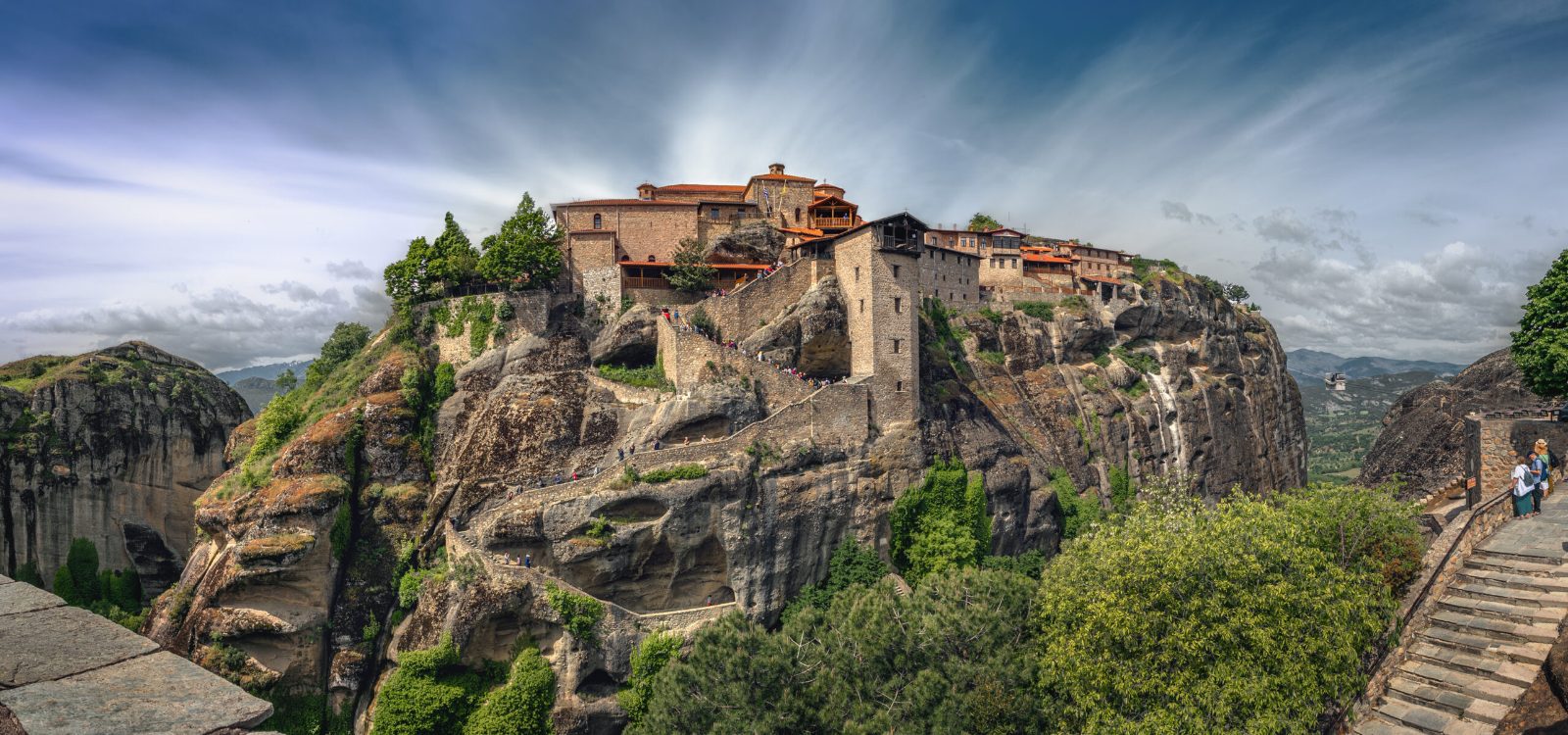
Your guide leads you up 300 stone steps to the Great Meteoron, where you pause in the katholikon to study frescoes of the Last Judgment before descending to the ossuary, its walls lined with the skulls of deceased monks arranged by date of death.
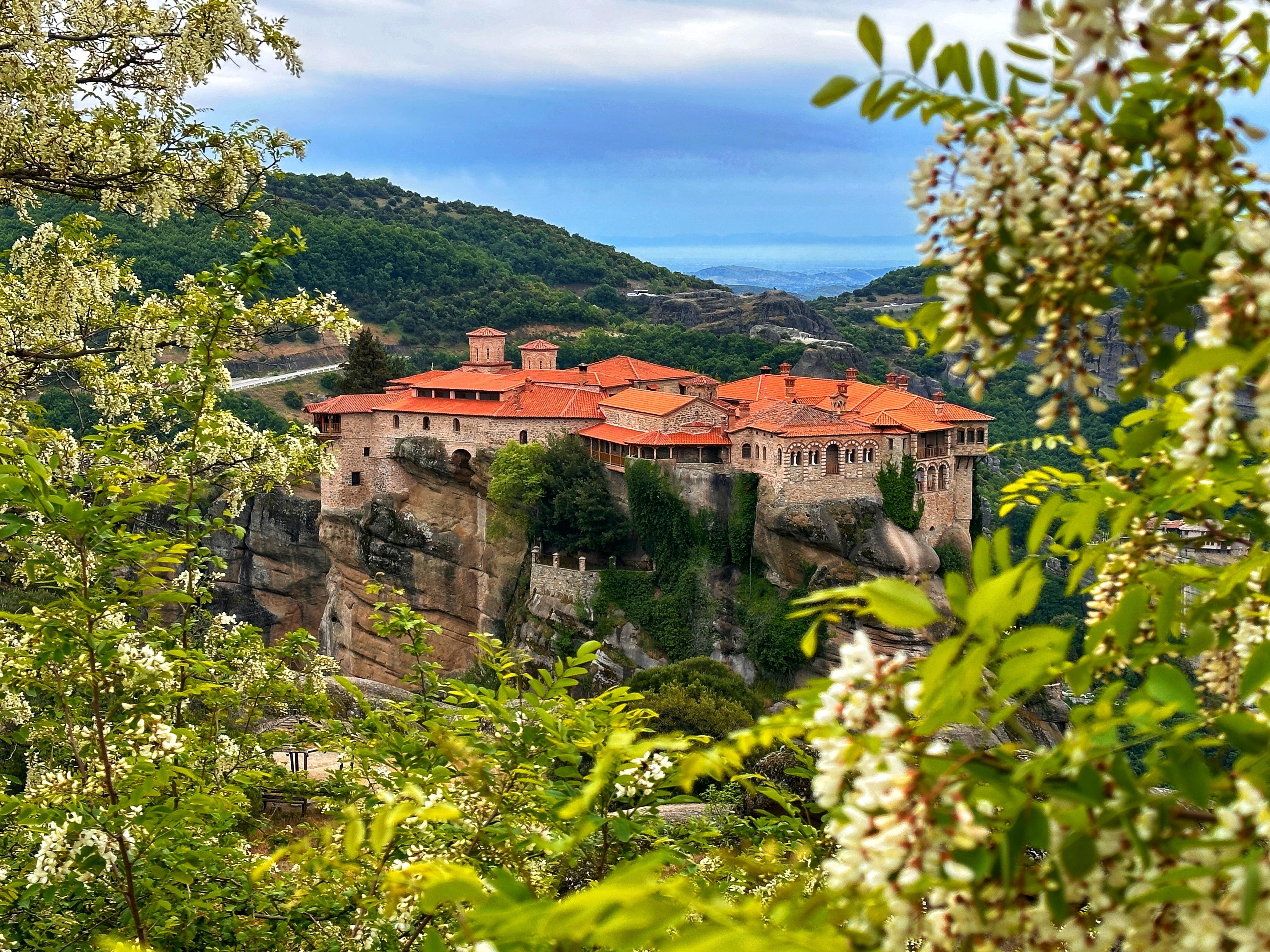
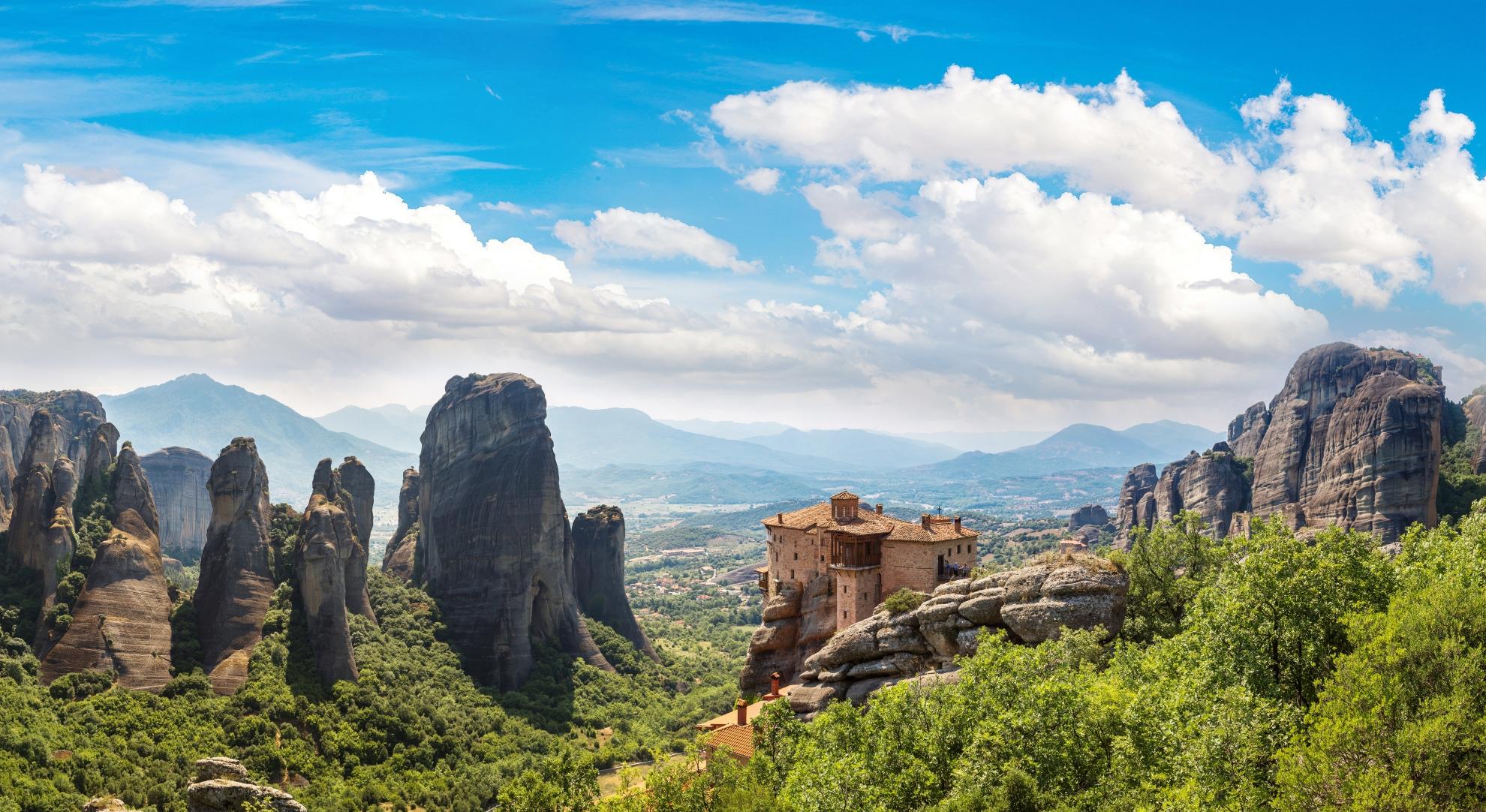
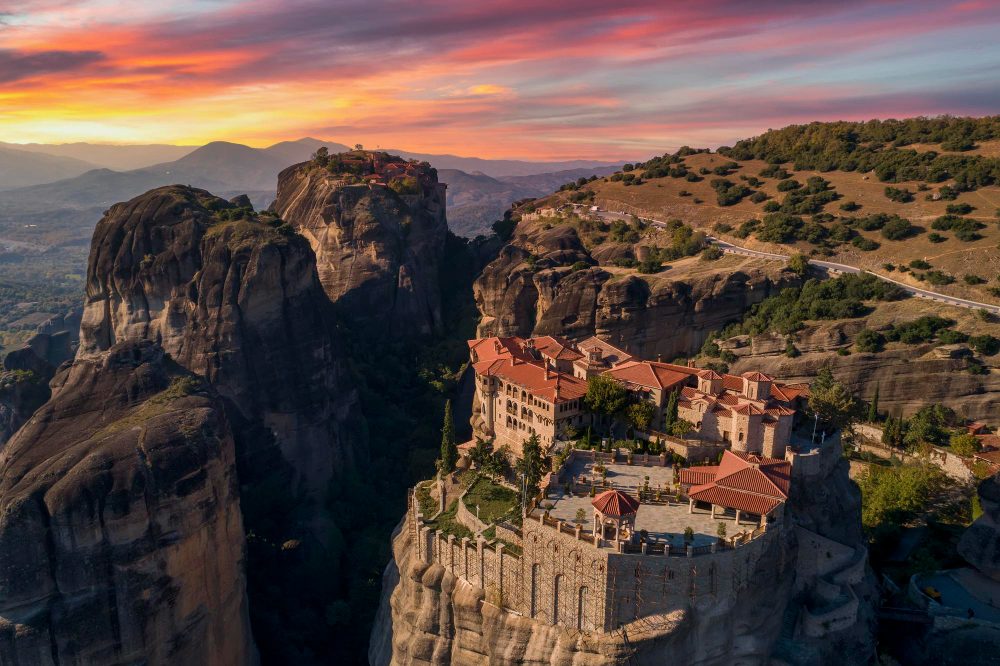
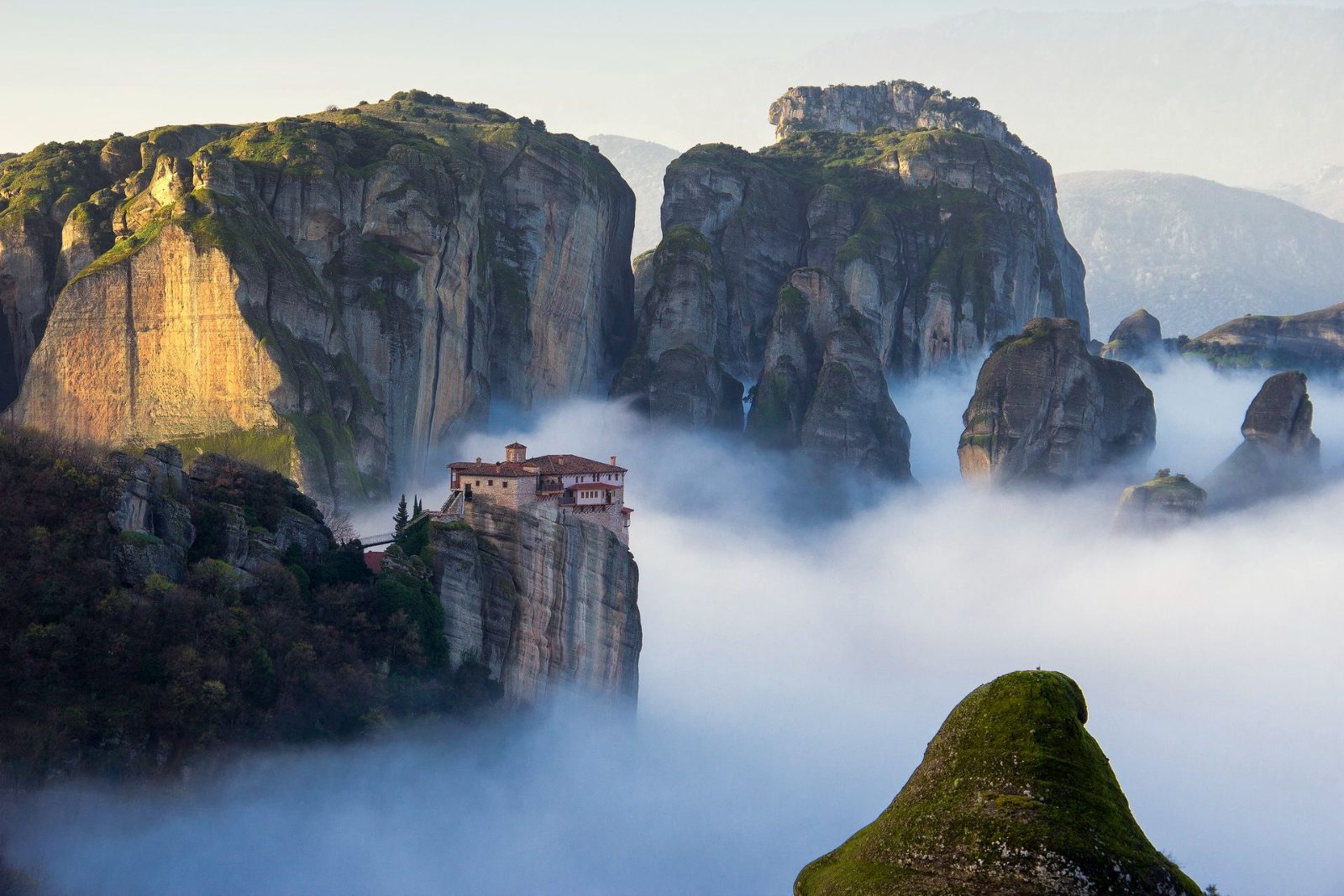
At Varlaam, you cross a footbridge suspended thirty metres above the ravine, then climb to the tower where a wooden windlass — still operational — once hoisted supply nets from the valley floor. The third stop brings you to Roussanou, a smaller monastery perched on a needle-thin column, its garden terrace offering unobstructed views across the Pineios River valley. You pause for lunch in Kalabaka, the town's tavernas serving grilled lamb and village salad beneath plane trees, before the return drive south, the coach reaching Athens as streetlights flicker on across Syntagma Square.
All the details about your upcoming adventure in one place
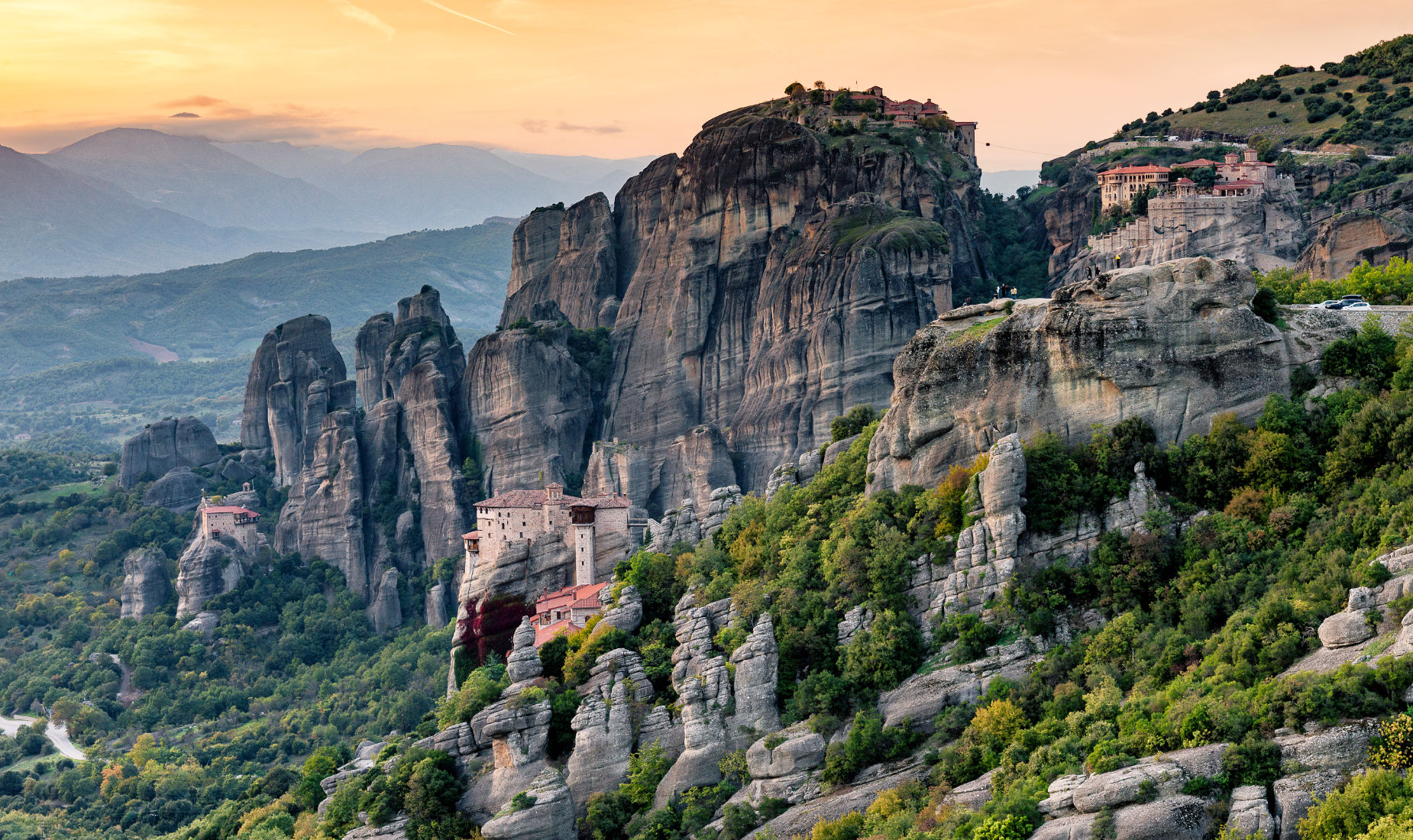
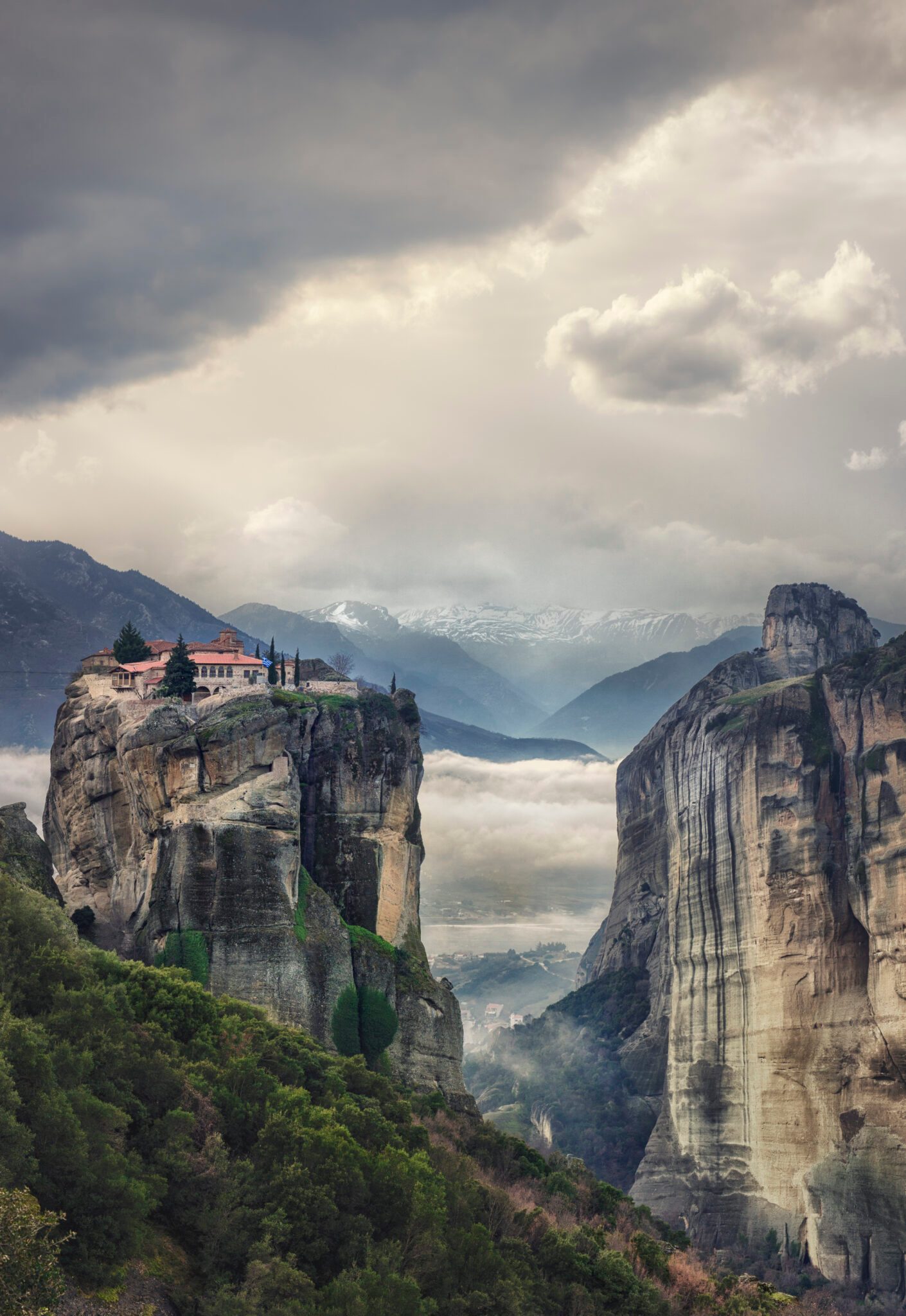
Six Eastern Orthodox monasteries cling to sandstone pillars that rise 400 metres above the Thessalian plain, their foundations laid between the fourteenth and sixteenth centuries by ascetics who hauled timber and stone up vertical rock faces using rope ladders and net baskets.
The geological formations — conglomerate rock columns shaped by tectonic upheaval and millennia of erosion — predate human settlement by twenty-five million years, but it was the strategic inaccessibility of the summits that drew monks fleeing Ottoman expansion in the 1300s. By 1500, twenty-four monasteries operated across the Meteora complex; today six remain active, home to small monastic communities that maintain daily liturgical schedules and welcome visitors who climb the carved staircases and iron footbridges installed in the early twentieth century.
The site's designation as a UNESCO World Heritage property in 1988 recognized both its natural geology and its cultural role as a repository of Byzantine frescoes, illuminated manuscripts, and liturgical artifacts spanning six centuries. The Great Meteoron monastery, founded in 1356 by Athanasius the Meteorite, houses a katholikon decorated with sixteenth-century wall paintings depicting the martyrdom of saints in forensic detail, while Varlaam monastery's refectory preserves a wooden iconostasis carved in 1791. Each monastery levies a five-euro conservation fee per visitor, funds directed toward masonry repairs and the digitization of manuscript collections stored in climate-controlled archive rooms rarely accessible to the public.
Meteora day trip from athens excursions typically depart the capital between six and seven in the morning, covering the 350-kilometer route through Boeotia and Thessaly in four to five hours via the E75 motorway. The village of Kalabaka, population 12,000, serves as the base for guided tours that navigate the single-lane roads connecting the monasteries, with most itineraries including stops at three to four sites — Great Meteoron, Varlaam, Roussanou, and occasionally the hermit caves carved into lower rock faces where solitary monks lived before the communal monasteries were established. The round-trip journey, including monastery visits and a midday meal in Kalabaka or the adjacent village of Kastraki, occupies twelve to fourteen hours, returning travelers to Athens by late evening.

By 1500, twenty-four monasteries operated across the Meteora complex; today six remain active, home to small monastic communities that maintain daily liturgical schedules.
Modest attire is mandatory for all visitors to ensure respect for the religious site. Men must wear long trousers and shirts with sleeves, while women are required to wear long skirts or dresses that cover the knees and keep their shoulders covered.
Large backpacks and bulky luggage should be left in your transport vehicle, as there are no secure storage facilities at the monasteries. Visitors are responsible for their own belongings throughout the visit.
Photography is permitted in the outdoor courtyards and terraces, but is strictly prohibited inside the main churches and chapels. Tripods and flash photography are not allowed anywhere on the premises.
Children are welcome to explore the area, but please ensure they remain quiet and respectful inside the religious buildings. Note that the stairs may be difficult for young children or those requiring strollers.
Access to the monasteries involves uneven stone paths and up to 300 steps. Individuals with limited mobility may find the climb challenging, and there are currently no specialized facilities for those with disabilities.
Food and drink are not permitted inside the monastery chapels. Visitors are encouraged to carry water and small snacks for the climb, which can be enjoyed at designated outdoor areas.
Opening hours
09:00–17:00
Address
Meteora, Kalabaka 422 00, Greece
Step count
300
Best arrival window
09:00–10:30
Storage
None available at monastery sites
Official site
https://www.meteoromonastery.gr
Public transport · 4.5 hours · Varied ticket prices
Trains run daily from Athens (Larissis Station) to Kalabaka station.
Car · 4 hours · Fuel and tolls apply
Follow the A1 highway towards Trikala and continue to Kalabaka.
Full refunds are typically available for cancellations made at least 24 hours prior to the scheduled start time. Note that the 5 EUR conservation fee is usually paid in cash on-site and is non-refundable by the tour operator.
Recommended time
4-5 hours
Planning a meteora day trip from athens requires balancing travel logistics with the time needed to navigate the rock formations and stone staircases. Most visitors find that allocating half a day provides sufficient buffer to visit multiple monasteries, though you should allow extra time if you rely on the local shuttle rather than organized meteora day trip from athens tours. Queues for meteora day trip from athens tickets at the entrance can fluctuate, and the 300 steps at each site mean that group movement is often restricted by foot traffic.
Crowd levels through the day
Weather · crowds · average price — dots go green to amber to red as each metric rises.
March to May offer mild temperatures and blooming wildflowers, perfect for outdoor exploration.
June to August see warmer weather and higher visitor numbers, requiring early starts.
September to November feature pleasant temperatures and fewer crowds, ideal for a meteora day trip from athens.
December to February provide a quiet experience, though some sites may have adjusted winter hours.
Plan your visit to arrive at the first monastery by 09:00 to stay ahead of the large coach tours.
Ensure you verify which monastery is closed on your specific day of travel as each follows a different weekly rotation.
Monasteries require the 5 EUR conservation fee in cash; exact change is highly recommended.
Keep a lightweight shawl or sarong in your bag to quickly adapt to the required dress code.
Wear sturdy walking shoes with good grip to handle the uneven stone steps leading to the monasteries.
Kalabaka 422 00, Greece
Central departure point for many tours.
Get directionsHermits seeking spiritual isolation climbed the sandstone pillars of Meteora as early as the ninth century, chiseling shallow caves into rock faces two hundred meters above the Thessalian plain. By the eleventh century, a loose community of ascetics occupied the cliffs, subsisting on bread hoisted in baskets and rainwater caught in cisterns. The first formal monastery, Megalo Meteoron, was founded in 1356 by Athanasios Koinovitis, a monk fleeing the political chaos of Mount Athos during Serbian invasions. He established a katholikon atop the highest pillar, accessible only by rope ladder and net, and drafted a monastic rule that transformed scattered hermitages into an organized cenobitic brotherhood. The fifteenth and sixteenth centuries brought explosive growth. Serbian and Byzantine aristocrats, displaced by Ottoman conquest, endowed twenty-four monasteries across the pinnacles, importing frescoes from Cretan workshops and liturgical manuscripts from Constantinople. Varlaam Monastery was rebuilt in 1541 on the ruins of a fourteenth-century hermitage, its katholikon decorated by the iconographer Frangos Katelanos. Monks hauled building stone in wicker baskets winched by hand-cranked windlasses, a system that remained in use until the 1920s. The community peaked at over three hundred monasteries and sketes by the seventeenth century, though most were abandoned after Ottoman taxation policies and banditry made resupply routes untenable. Modern access began in the 1920s when the Greek government cut steps into the rock, initially to supply monasteries during the Greco-Turkish War. Paved roads reached the complex in the 1960s, and cable cars replaced rope systems in 1975. Only six monasteries remain active today, with fewer than fifty resident monastics across all foundations. The shift from pilgrimage site to destination for a meteora day trip from athens has reshaped preservation priorities, with entrance fees funding structural repairs to frescoes damaged by nineteenth-century fires and twentieth-century seismic activity.
Hermits carve the first refuge caves into Meteora's sandstone pillars.
Athanasios Koinovitis founds Megalo Meteoron, establishing formal monastic rule.
Twenty-four monasteries are built with patronage from displaced Byzantine nobility.
Varlaam Monastery is rebuilt and decorated by Cretan iconographer Frangos Katelanos.
The Greek government carves access steps into the rock faces for wartime resupply.
Paved roads reach the monastic complex, ending centuries of rope-basket access.
Meteora is inscribed as a UNESCO World Heritage Site for cultural and geological significance.
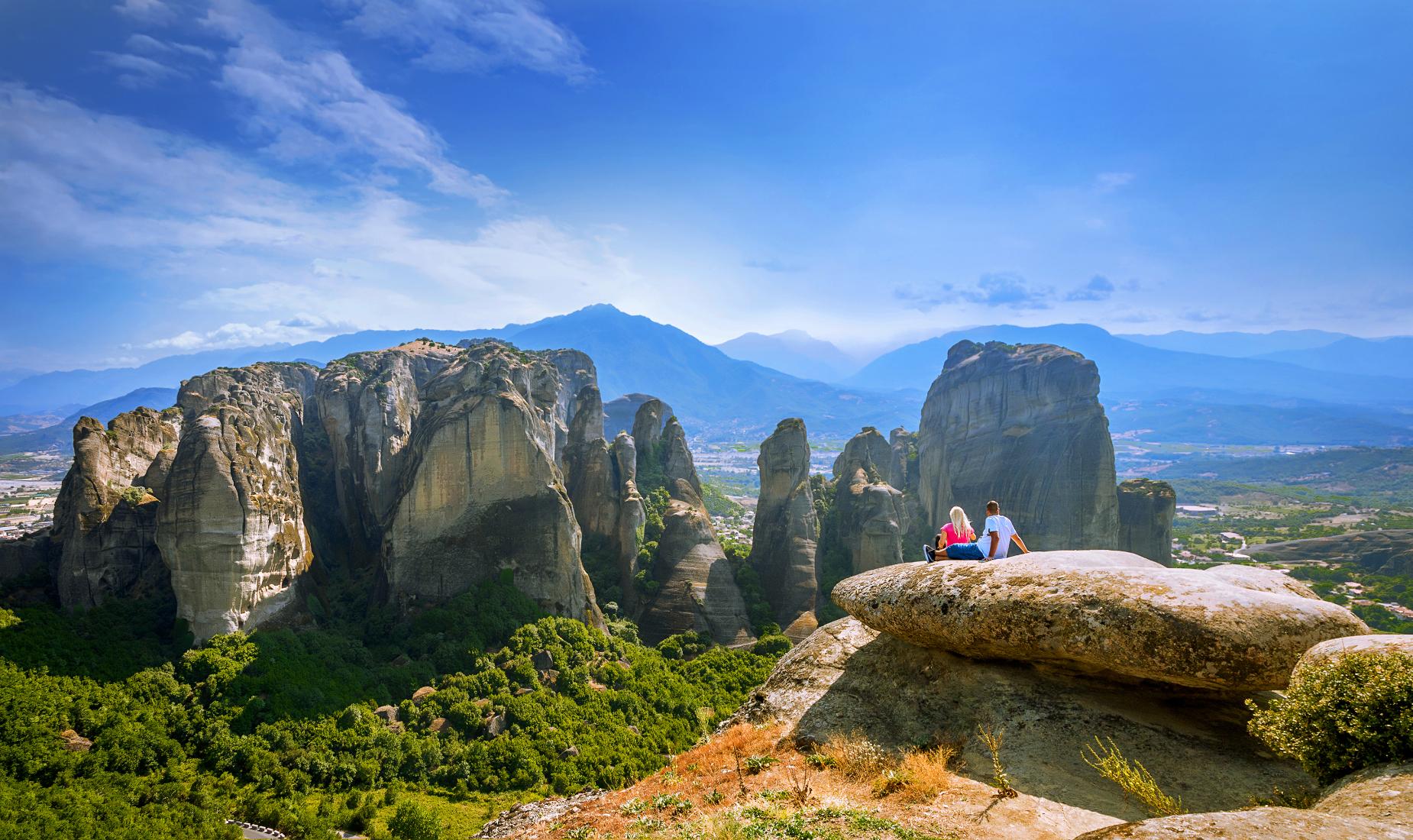
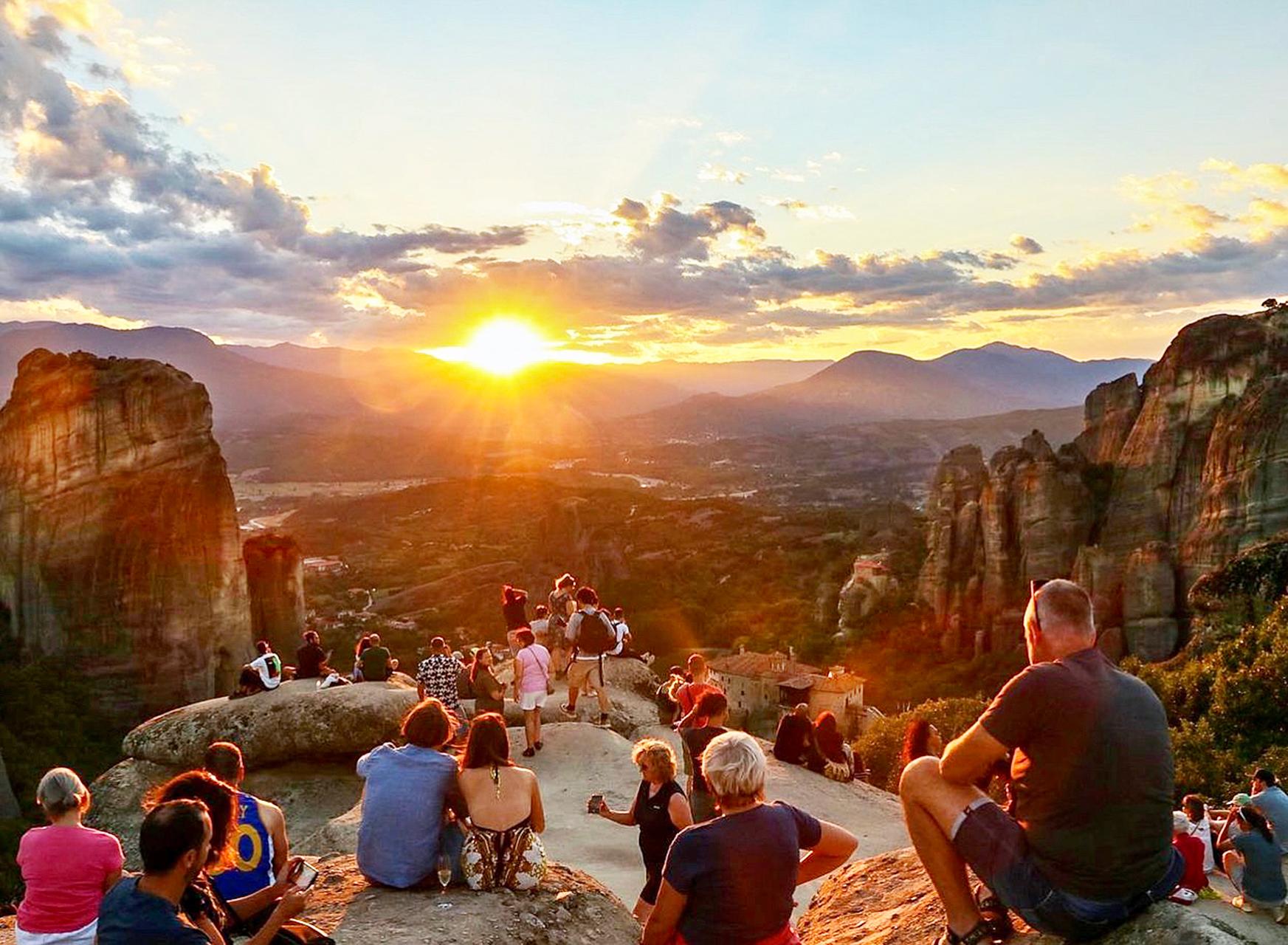
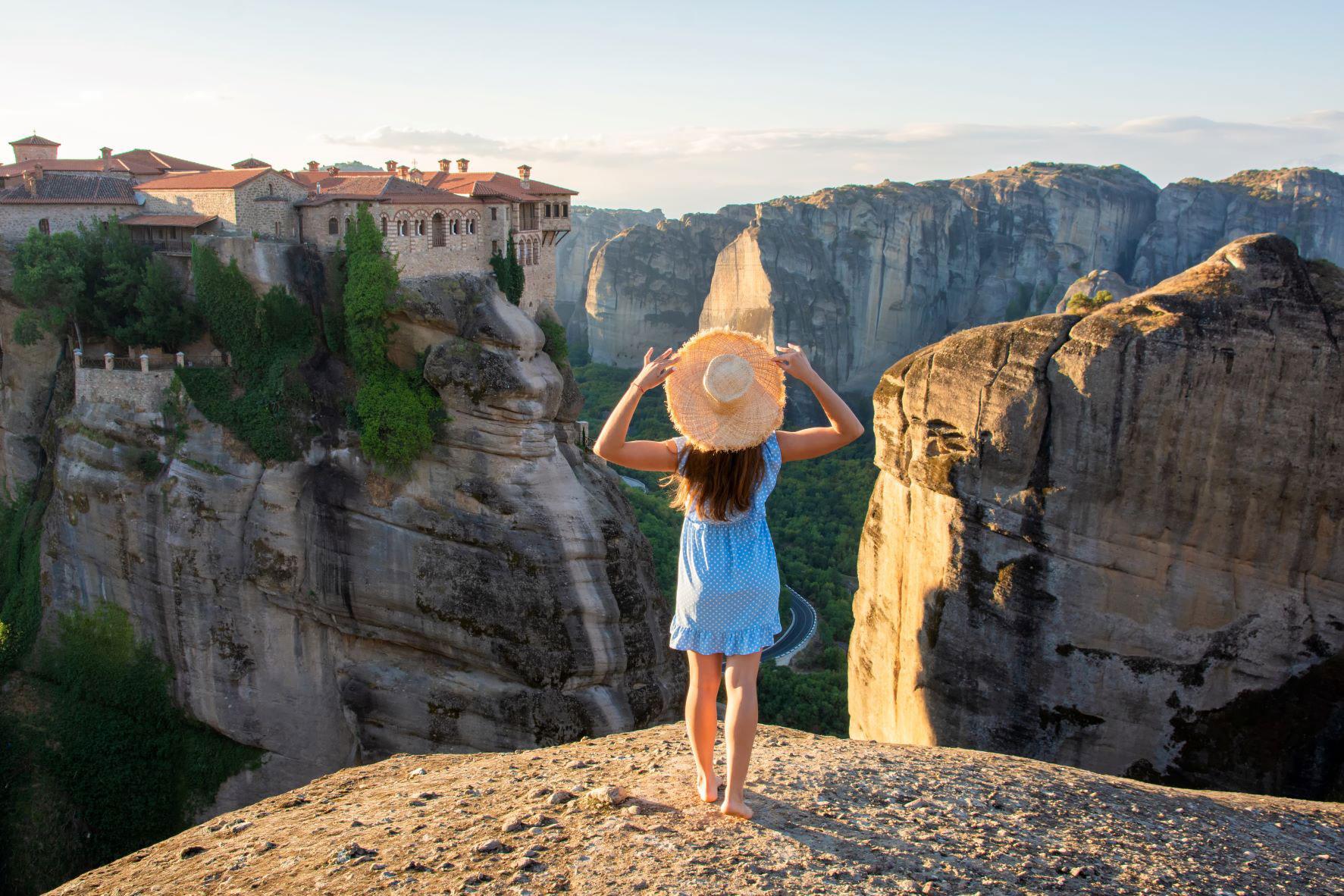
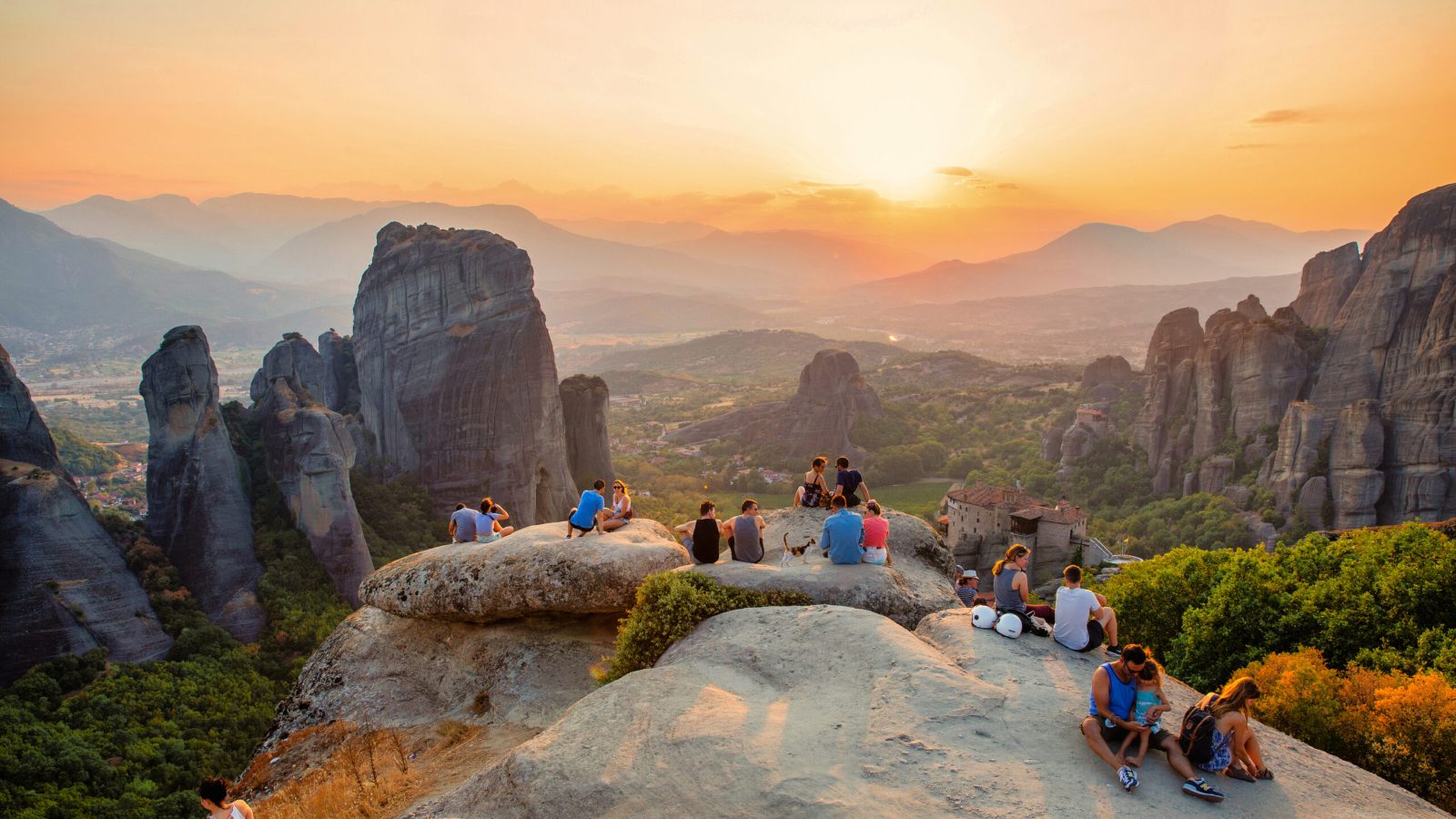
Position yourself on the flat rocky outcrop facing the Grand Meteoron to capture the sandstone pillars at dusk. This location is a highlight for those on a meteora day trip from athens who want the classic silhouette shot.
Located near the monastery of Varlaam, this vantage point provides a panoramic perspective of the UNESCO heritage site rock formations. Stand near the stone railing to frame the cliffs against the valley floor.
From the edge of the monastery courtyard, photographers can capture the dizzying drop of the iron lattice structures against the sky. Note that you should verify meteora day trip from athens tickets availability, as this spot requires monastery access.
Several turnouts along the winding road between Kalabaka and the monasteries offer clear lines of sight to the eastern pinnacles. These spots are ideal for capturing the vertical scale of the sandstone pillars as part of your meteora day trip from athens tours.
A meteora day trip from athens brings your family to a landscape of massive stone pillars and historic cliff-top retreats that feel like a scene from a storybook. While the dramatic height of these UNESCO World Heritage landmarks can seem daunting, careful planning makes for a manageable adventure with children.
Strollers are not practical here because most monasteries require climbing up to 300 steps carved directly into the rock. Use a baby carrier for younger children instead of a pushchair.
St. Stephen is the most accessible monastery, featuring a flat footbridge that avoids steep stair climbs entirely. This makes it a perfect first stop for families looking to explore the interior without overwhelming tired legs.
This destination is ideal for children aged 6 and up who have the stamina for some walking. Younger children may find the stair-heavy terrain challenging, so focus on viewpoint stops along the ring road to keep spirits high.
There are no baby-change stations or dedicated facilities at the monasteries, so plan to carry all necessary supplies. Pack plenty of water and snacks from town before heading up to the pillars, as options at the monastery gates are limited.
A successful meteora day trip from athens tour is best enjoyed by visiting only one or two monasteries to avoid exhaustion. Use the rest of your time to take photos at the scenic overlooks and enjoy the vast scale of the sandstone formations.
When looking for a meteora day trip from athens tickets, verify the itinerary inclusions, as some group options focus on heavy walking while others prioritize viewpoints. Always confirm your specific tour company's child eligibility policy before securing your spot.
Dining options near a meteora day trip from athens are concentrated in Kalabaka, where traditional Greek tavernas cater to travelers on a tight schedule. While you prepare for your monastery visit and 300 steps, consider grabbing a meal in town before or after your exploration.
Located in the heart of Kalabaka, this venue offers hearty local dishes perfect for those joining meteora day trip from athens tours. It is well-regarded for efficient service during peak lunch hours.
A reliable spot for quick, authentic Greek fare that suits the itinerary of a meteora day trip from athens tour. Its central location makes it an ideal stop before picking up meteora day trip from athens tickets at local agencies.
Providing a view of the sandstone rock formations, this restaurant offers a relaxed atmosphere. It is an excellent choice for a seated meal to reflect on the Byzantine architecture and mountain scenery.
Everything you need to know for your journey
Opening hours for monasteries are 09:00–17:00 daily. Always check current schedules before starting your meteora day trip from athens, as individual monastery closures vary.
Yes, the entrance fee is 5 EUR per person, per monastery. This conservation fee is collected in cash at the entrance of each site you visit.
Yes, you must cover your shoulders and knees. Men need long trousers and women need skirts that cover the knees. These rules are strictly enforced for every meteora day trip from athens.
There are no secure lockers at the monasteries. It is best to leave large bags in your tour vehicle or at your accommodation during your meteora day trip from athens.
Photography is allowed in the outdoor courtyards but strictly prohibited inside the chapels. Please respect these rules during your meteora day trip from athens.
The best arrival window is between 09:00–10:30. This ensures you avoid the peak crowds that arrive later in the day on a meteora day trip from athens.
Yes, families are welcome, but be aware there are 300 steps involved at some locations. Ensure children are prepared for this physical aspect of a meteora day trip from athens.
Cancellation policies depend on your specific booking. Generally, you should review your operator's terms, as the entrance fee is often paid separately during your meteora day trip from athens.
Expect significant walking and climbing. With 300 steps at some locations, a moderate level of fitness is recommended for any successful meteora day trip from athens.
A prehistoric site located near Kalabaka with deep archaeological roots.
A small, unique cliffside site known for the tradition of hanging scarves.
Features exhibits on local ecology and the mushroom culture of the region.
Join thousands of happy travelers who have discovered this incredible experience
Book Your Experience Now