
Quick answer
The most reliable way to reach Meteora from Athens is the direct OSE train to Kalambaka, departing Athens Larissa station at 07:20 and arriving at 11:54—a 4.5-hour journey. KTEL buses from Liossion terminal take five hours with a midway stop in Trikala. Driving the E75 highway covers 350 kilometers in four hours, but toll costs and Kalambaka's narrow monastery-access roads require careful planning. All three methods deliver you to Kalambaka, the base town 2 kilometers below the rock pillars.
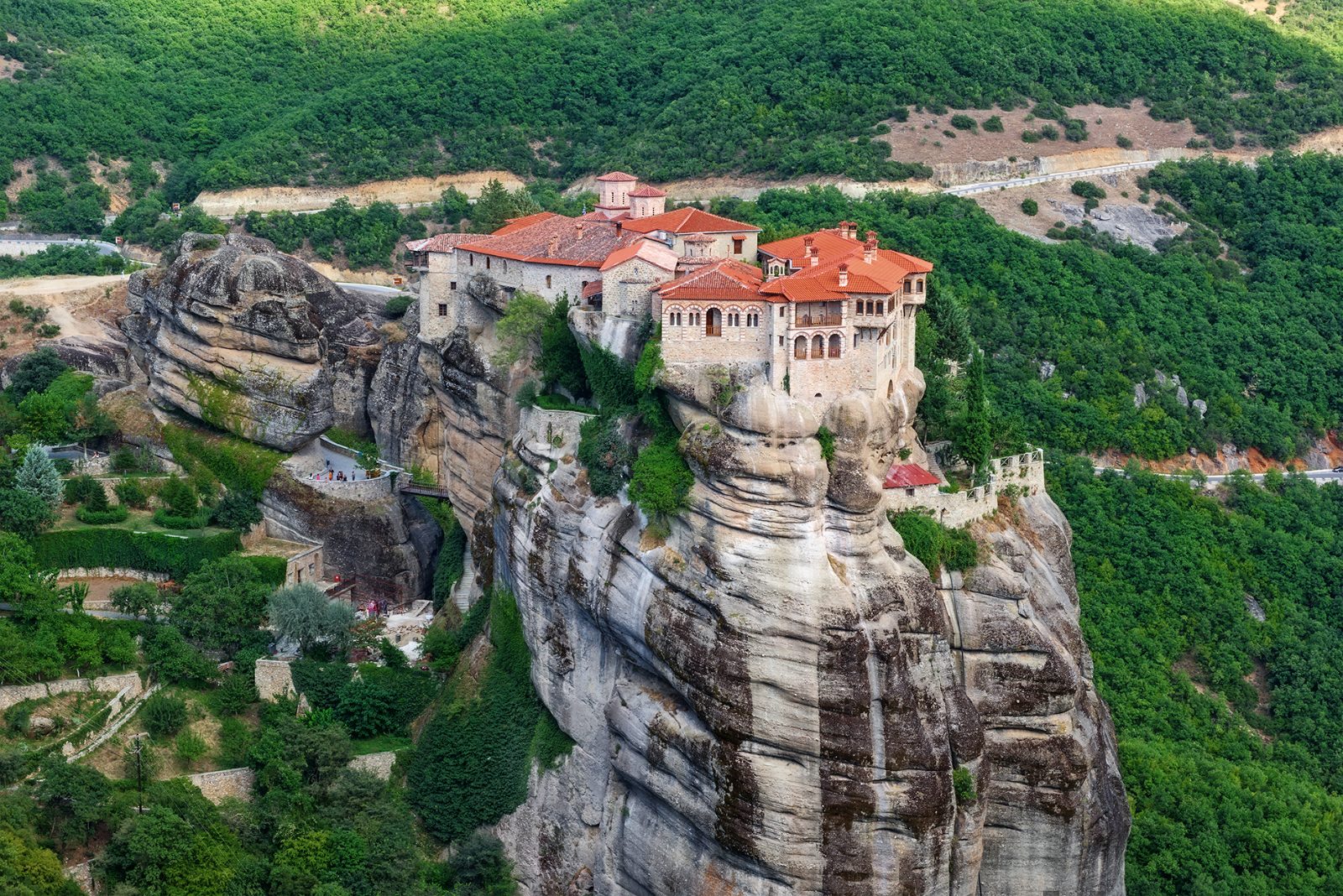
The rock towers of Meteora rise abruptly from the Thessalian plain, and unlike Athens' coastal monuments, they occupy landlocked terrain with no airport nearby. Kalambaka, the gateway settlement, anchors the base of the geological formation—every visitor arriving from the capital must first reach this town, then ascend the winding monastery roads that cling to the sandstone cliffs. The train from Athens Larissa station follows the main northern rail corridor through Thessaly, cutting through Domokos and Paleofarsalos before the final approach into Kalambaka's hillside terminal. Morning departures align with the monasteries' 09:00 opening, allowing travelers who board the 07:20 service to reach the Great Meteoron or Varlaam by early afternoon. The single-class carriages carry no dining car; bring provisions for the journey. Bus services depart from Athens' Liossion terminal and trace the E75 highway, the same route drivers take when piloting rental vehicles northward. The road climbs through Lamia and the Pindus foothills before descending into the Pineios valley. KTEL schedules two daily departures—one at 07:30, another mid-afternoon—with the morning option timed for same-day monastery visits. Drivers face two toll plazas and fuel stops in Lamia or Trikala; the route is direct, but Kalambaka's monastery-access lanes are steep single-track switchbacks unsuited to large vehicles. Once in Kalambaka, the six active monasteries—Great Meteoron, Varlaam, Roussanou, Holy Trinity, St. Stephen, and St. Nicholas Anapafsas—spread across 8 kilometers of clifftop plateaus. Local buses run a circuit April through October, but most visitors hire taxis or walk the stepped pathways carved into the rock faces. The conservation fee of 5 EUR applies at each monastery entrance, paid separately. Kalambaka's position below the formations means every monastery visit involves an ascent; plan return transport before the 17:00 closures to avoid the post-sunset descent in failing light.
“The rock towers rise abruptly from the Thessalian plain, and unlike Athens' coastal monuments, they occupy landlocked terrain with no airport nearby.”
How To Get To Meteora From Athens: Train, Bus, and Car Options
Meteora is located near the town of Kalambaka in central Greece. Travelers typically access the region via direct rail services, intercity bus routes, or private vehicles from Athens.
Hellenic Train from Athens Station (Larissis) to Kalambaka
KTEL bus from Liosion Station to Kalambaka via Trikala
National Road A1 to E65
Best Time Of Day And Season For How To Get To Meteora From Athens
The best arrival window is 09:00–10:30, as this allows visitors to enter the monasteries before the arrival of large coach groups from Athens. Planning your visit around these hours ensures a more consistent pace through the 200 steps at each site.
Spring (April–May)
ModerateMild 15°C to 22°C
Vegetation is green and temperatures are comfortable for climbing stairs.
Summer (June–August)
HighHot 28°C to 35°C
Early morning visits are necessary to avoid midday heat and peak congestion.
Autumn (September–October)
ModerateCool 12°C to 20°C
Stable weather conditions provide clear views for photography and site exploration.
Winter (November–March)
LowCold 3°C to 12°C
Fewer crowds are present, though some routes may experience fog or occasional snow.
Verdict: The optimal period to visit is Tuesday to Thursday during the shoulder months of April or October, arriving promptly at 09:00.
Monastery Opening Hours After Traveling To Meteora From Athens
The monasteries in Meteora maintain a consistent schedule throughout the week to accommodate visitors arriving from Athens. All monasteries operate daily during the following hours.
| monday | 09:00–17:00 | |
|---|---|---|
| tuesday | 09:00–17:00 | |
| wednesday | 09:00–17:00 | |
| thursday | 09:00–17:00 | |
| friday | 09:00–17:00 | |
| saturday | 09:00–17:00 | |
| sunday | 09:00–17:00 |
Checklist For How To Get To Meteora From Athens Successfully
Three logistics steps will smooth your Athens–Meteora journey and monastery visits.
-
Book train tickets early — Greek railway seats sell out during peak season, especially morning departures.
-
Pack modest clothing and a scarf — Monasteries enforce a strict dress code: covered shoulders, long skirts or trousers required.
-
Wear sturdy shoes with grip — Each monastery involves climbing around 200 steps on stone staircases.
-
Carry €5 cash per monastery — The conservation fee is collected on-site at each entrance.
-
Plan for 09:00–10:30 arrival — Reaching Meteora within this window lets you enter before coach groups arrive.
Check availability
Frequently Asked Questions About Visiting Meteora
Everything you need to know about how to get to meteora from athens