14 hr
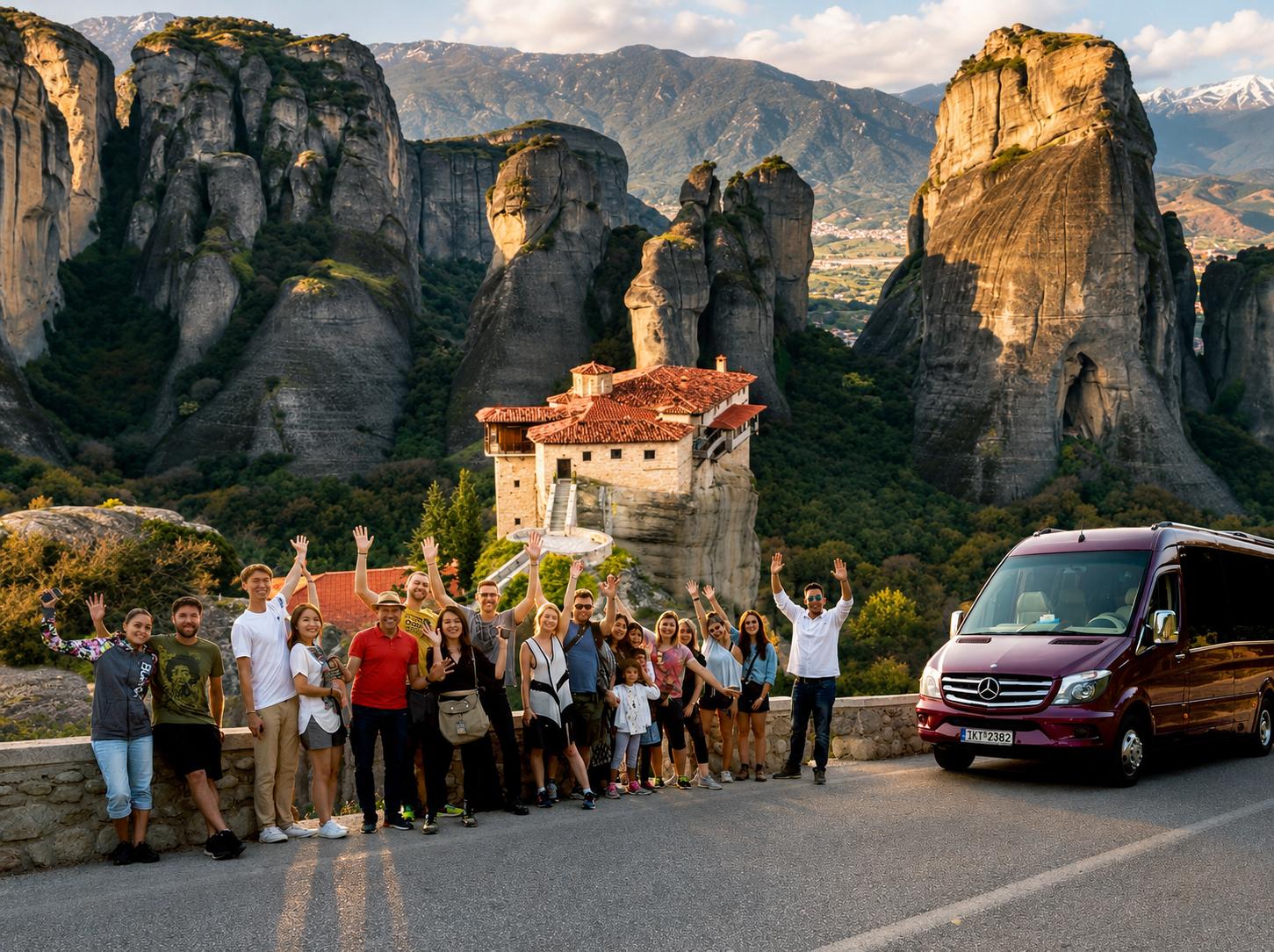
Meteora Monasteries Day Tour from Athens
- Expert local guide
- Small group
- Skip-the-line access
- Free cancellation
Meteora Day Trip from Athens by Bus — Monastery Visits & Guided Tours
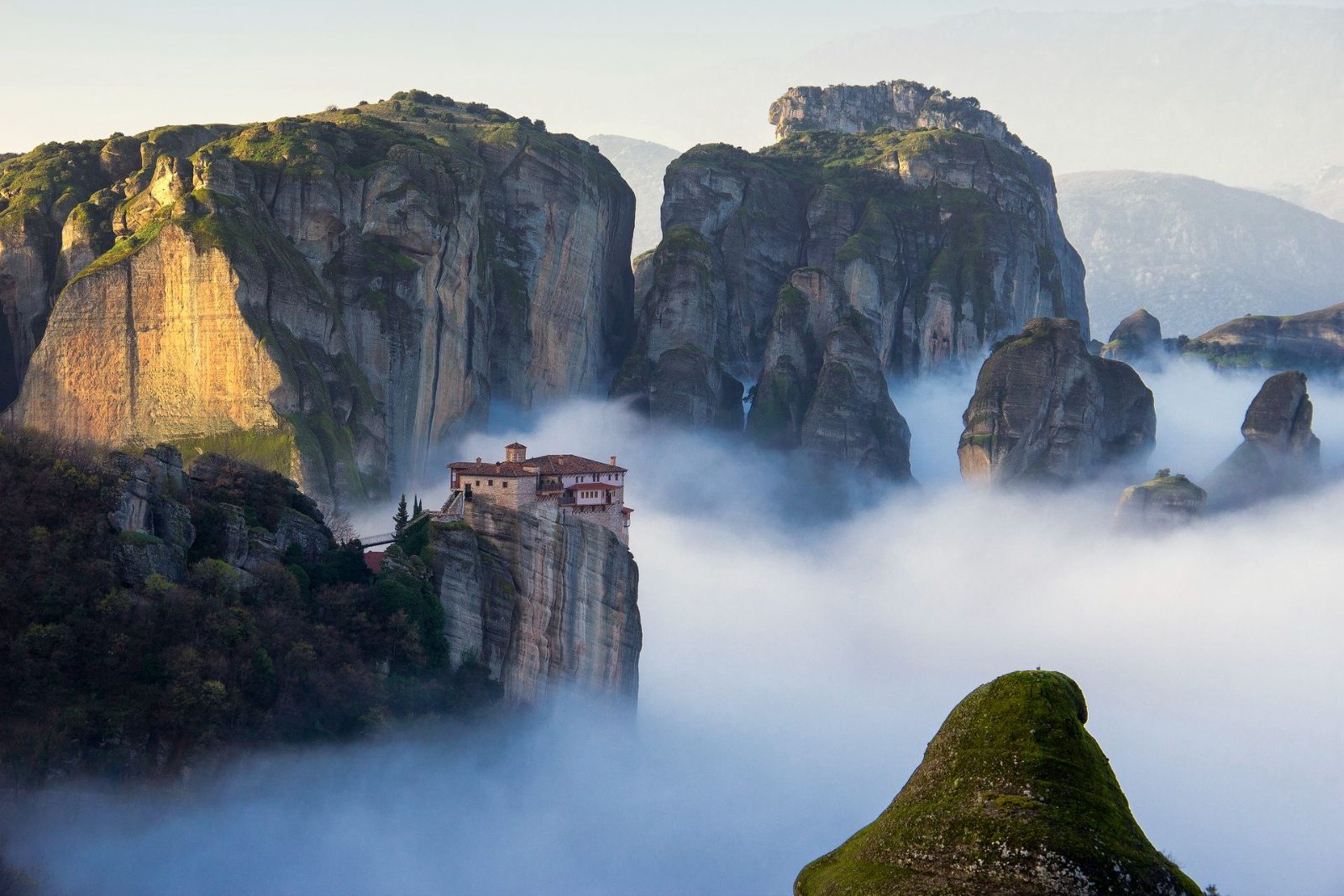
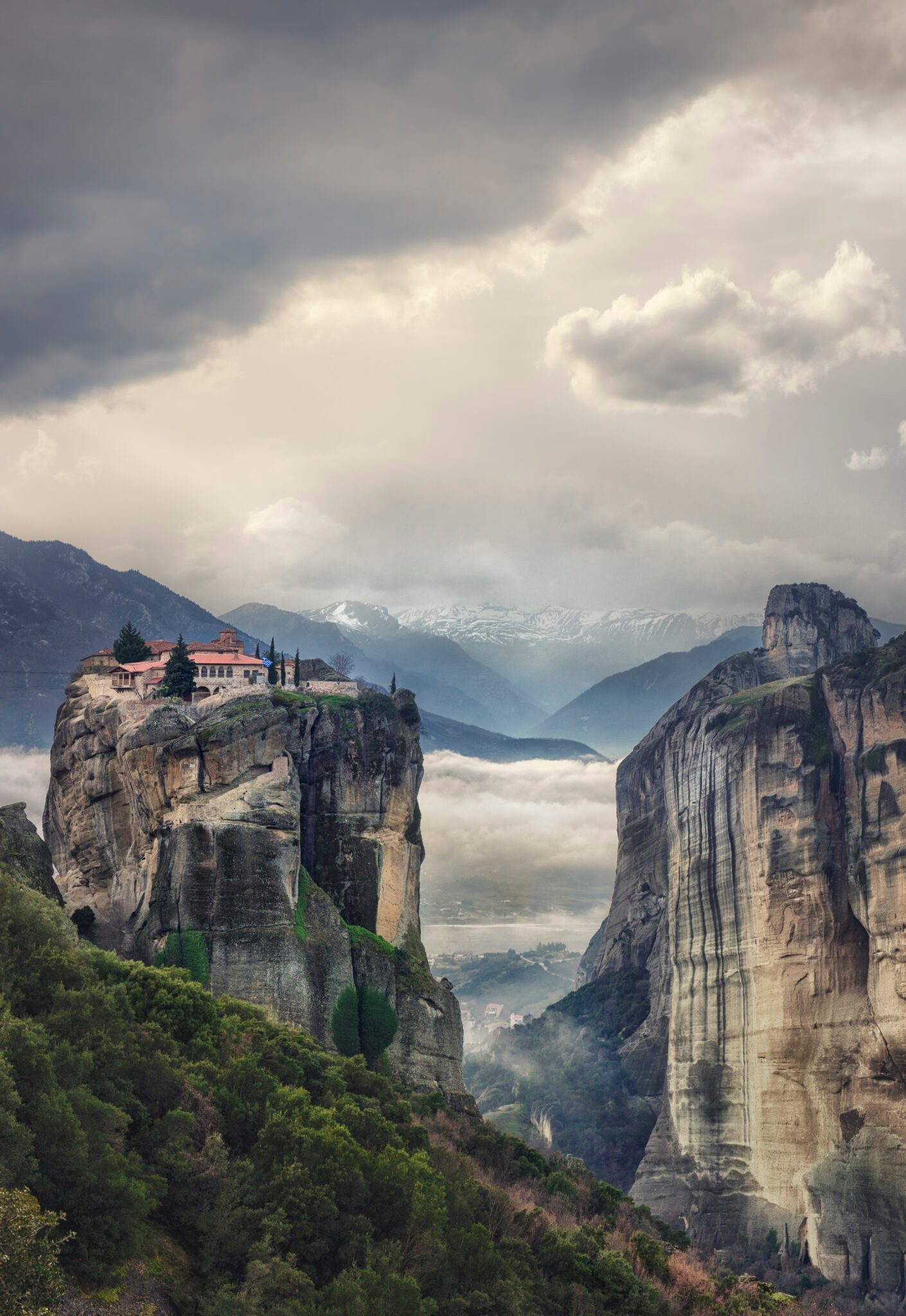
Five-hour coach ride north to monasteries suspended on sandstone pillars, UNESCO-listed since 1988
Compare fares, pick the fit — all bookings are mobile-voucher and eligible for free cancellation where shown.
14 hr
14 hr
14 hr
| Experience | From | Duration | Rating | Transfers | Skip-the-line | Guide | Price | |
|---|---|---|---|---|---|---|---|---|
|
Guided Experience
Most popular
Meteora Monasteries Day Tour from Athens
|
Athens | 14 hr | ★ 4.7 | ✓ | ✓ | ✓ | $96 | Book → |
|
Guided Experience
Meteora Monasteries Full-Day Tour from Athens
|
Athens | 14 hr | ★ 4.8 | ✓ | ✓ | ✓ | $85 | Book → |
|
Guided Experience
Meteora Monasteries Day Trip from Athens with Coastal Stops
|
Athens | 14 hr | ★ 4.7 | ✓ | ✓ | ✓ | $96 | Book → |
Worth it if you value UNESCO heritage over comfort
A meteora day trip from athens by bus demands commitment: fourteen hours round-trip for roughly four hours among the clifftop monasteries. The trade-off hinges on what you prioritize. If rock-pillar architecture and Byzantine frescoes outweigh long coach segments, the journey pays dividends—you'll visit two to three active monasteries, each perched on sandstone towers that defy gravity, and witness monastic traditions unbroken since the fourteenth century. Tours with coastal stops break monotony but shorten your Kalabaka window. Conversely, travelers who tire easily on motor coaches or prefer multi-day immersion may find the sprint format shallow. The five-euro conservation fee per monastery is modest; the real cost is fatigue. For those treating Greece as a highlights reel, meteora day trip from athens by bus tours deliver an icon efficiently. For slow travelers, an overnight in Kalabaka unlocks golden-hour light and unhurried exploration.
Bottom line: The meteora day trip from athens by bus tickets trade comfort for access—worthwhile if clifftop monasteries rank high on your Greece checklist and you accept the marathon travel envelope.
They complement each other; most visitors who do both call the guided bus tour the more relaxing way to experience these iconic Greek landmarks, while a car offers more freedom.
|
Top pick Guided Bus Tour |
Rental Car | |
|---|---|---|
| Travel stress | Low (no navigation) | High (driving required) |
| Total duration | 13.5 hours | 10–12 hours |
| Flexibility | Fixed itinerary | Complete autonomy |
| Onboard comfort | AC and Wi-Fi | Driver fatigue risk |
| Navigation difficulty | None (professional driver) | Requires route planning |
| Cost efficiency | Fixed package price | Fuel and rental fees |
| Group interaction | Social/Guided insights | Private experience |
| See tickets & prices |
Verdict: If you prefer an effortless experience to see these famous UNESCO heritage cliffs, the meteora day trip from athens by bus is the superior choice, whereas renting a vehicle suits those who prioritize pace and privacy over convenience.
Hand-picked experiences loved by thousands of travelers
14 hours
Free Cancellation
Journey to UNESCO-listed Meteora to explore ancient monasteries perched on dramatic rock pillars
14 hours
Free Cancellation
Journey to UNESCO-listed Meteora's clifftop monasteries with coastal stops, cave exploration, and expert guidance
14 hours
Free Cancellation
Journey by rail to Thessaly's clifftop monasteries, explore ancient hermit caves, and discover Byzantine treasures.
14 hours
Free Cancellation
Full-day UNESCO site tour with live Spanish guide, monastery visits, and traditional Greek meal
2 days
Free Cancellation
Escape to Meteora's clifftop monasteries on this overnight adventure with sunset views and cave exploration
2 days
Free Cancellation
Discover clifftop monasteries and stunning rock formations on this overnight adventure with sunset viewing
14 hours
Free Cancellation
Discover six clifftop monasteries and UNESCO landscapes on an intimate small-group journey from Athens
14 hours
Free Cancellation
Journey to Greece's clifftop monasteries on this UNESCO site day trip with scenic rail travel and lunch option
You board the coach in central Athens before sunrise, crossing the Boeotian plains as light spreads across Parnassus. Five hours north, the rock pillars appear on the horizon—grey-brown towers rising from green valley floor.
Your guide distributes wrap skirts and reminds you of the €5 conservation fee at each monastery entrance.
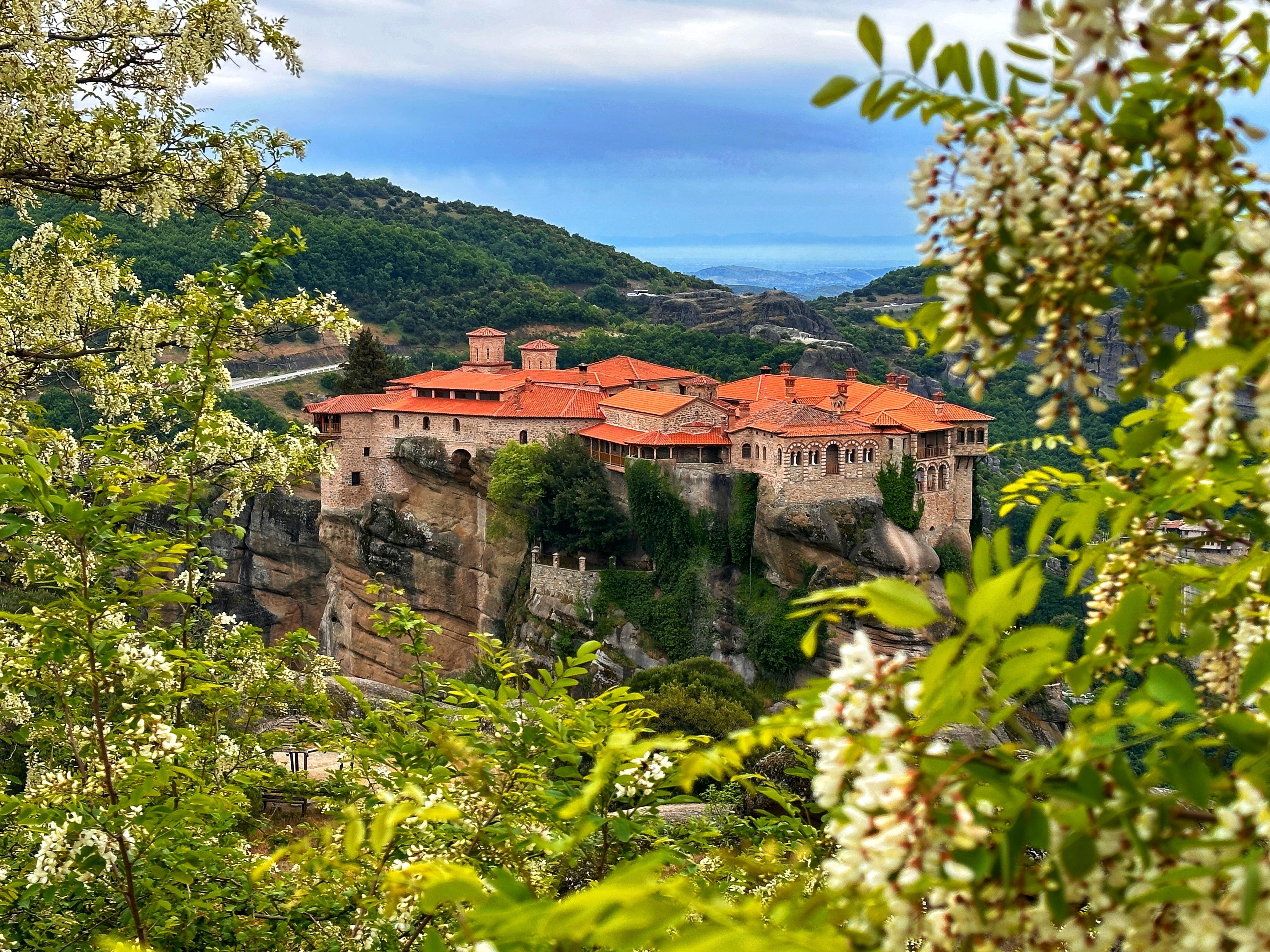
You climb 140 stone steps to Great Meteoron, pausing at the whitewashed courtyard to catch your breath. Inside the katholikon, sixteenth-century frescoes cover every surface—saints, martyrdoms, the Last Judgement rendered in ochre and cobalt. The refectory holds long wooden tables and a barrel-vaulted ceiling blackened by centuries of candle smoke. You cross a wooden footbridge to Varlaam, where a windlass and net dangle over the cliff edge—the original supply lift, last used in the 1930s.
At Roussanou, twenty nuns maintain the gardens and iconostasis. You photograph the valley from the western terrace, sandstone pillars casting long shadows across Kalabaka. The coach departs at 14:30, retracing the route south. You reach Athens by evening, the rock towers fading behind the Thessalian hills.
All the details about your upcoming adventure in one place
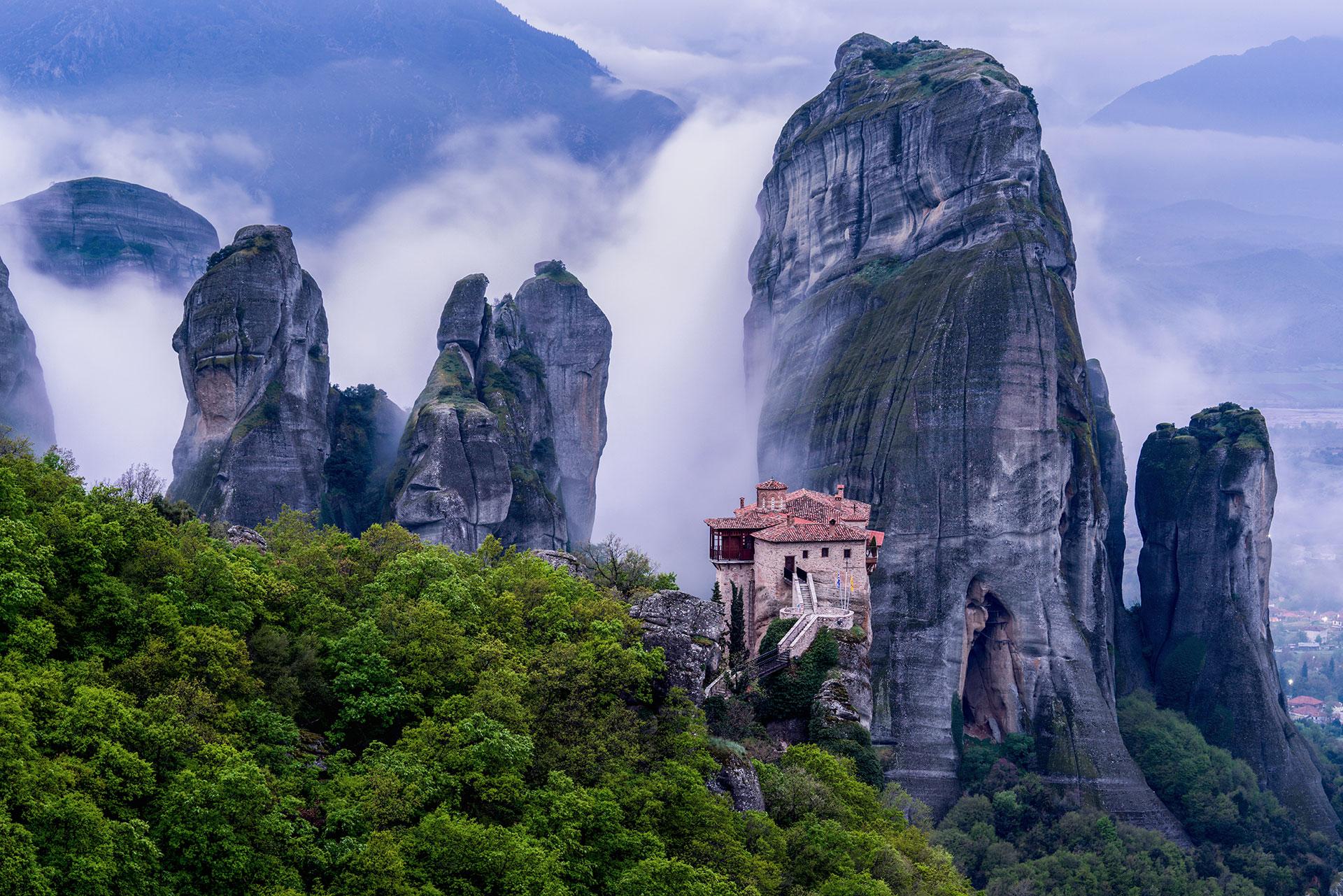
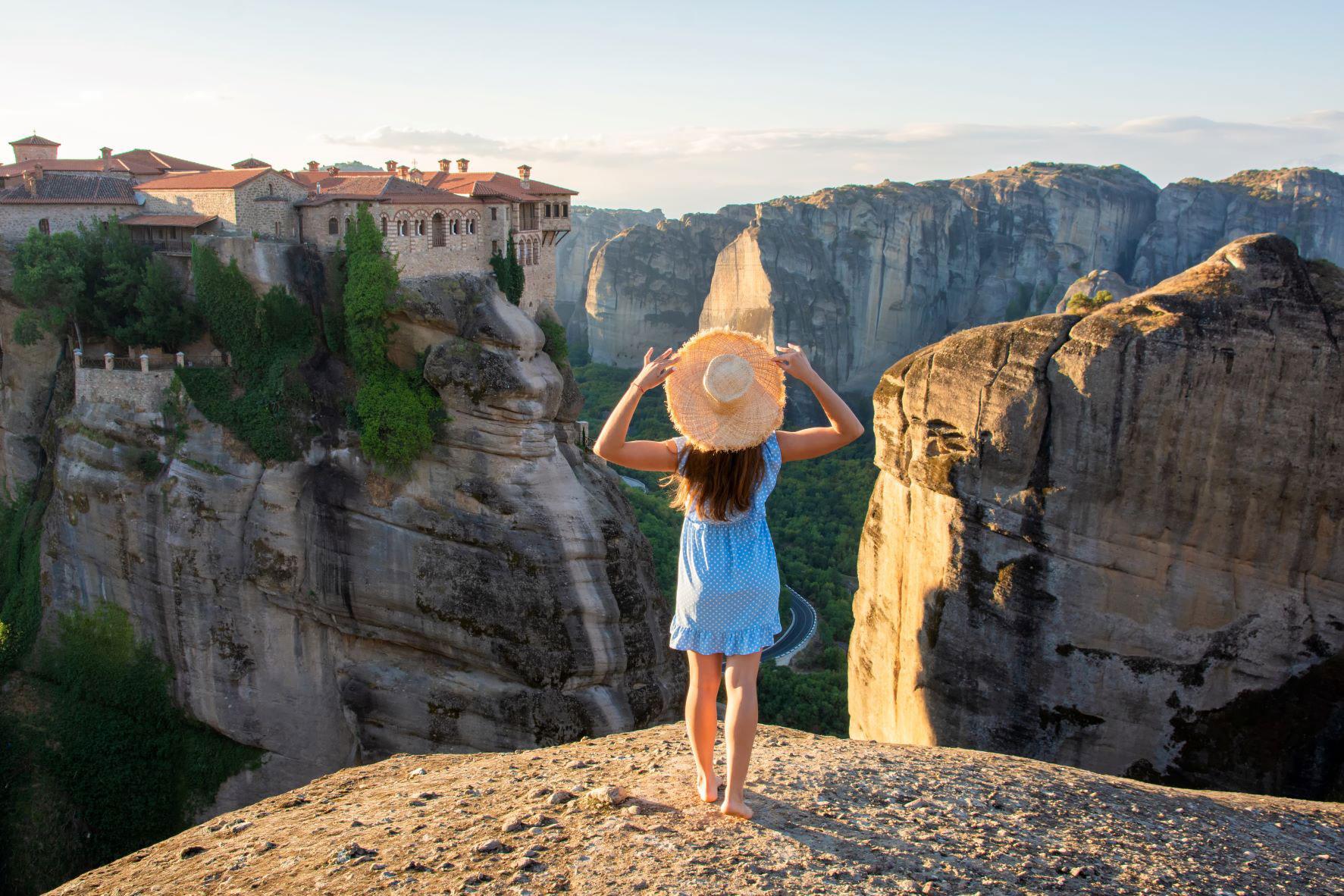
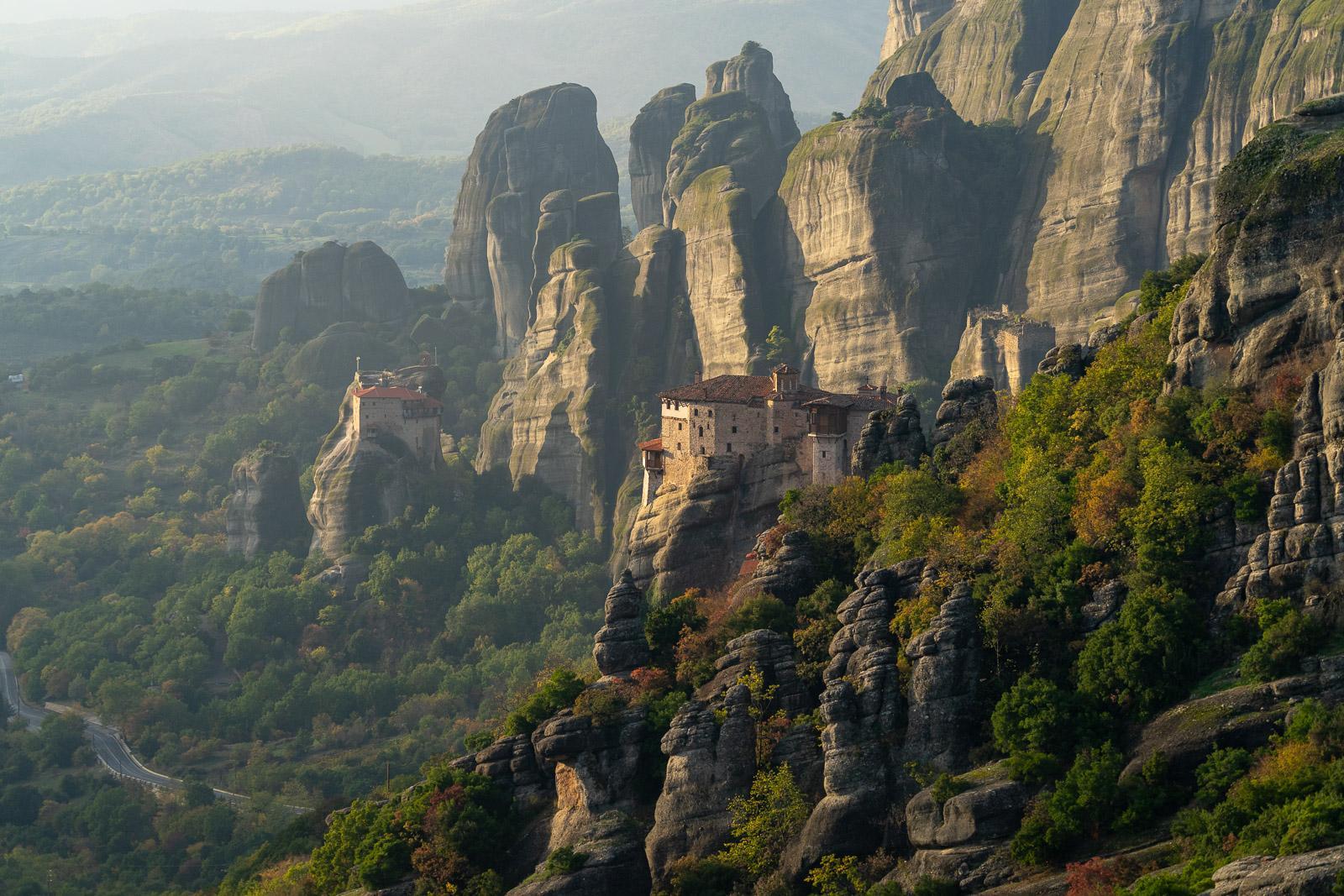
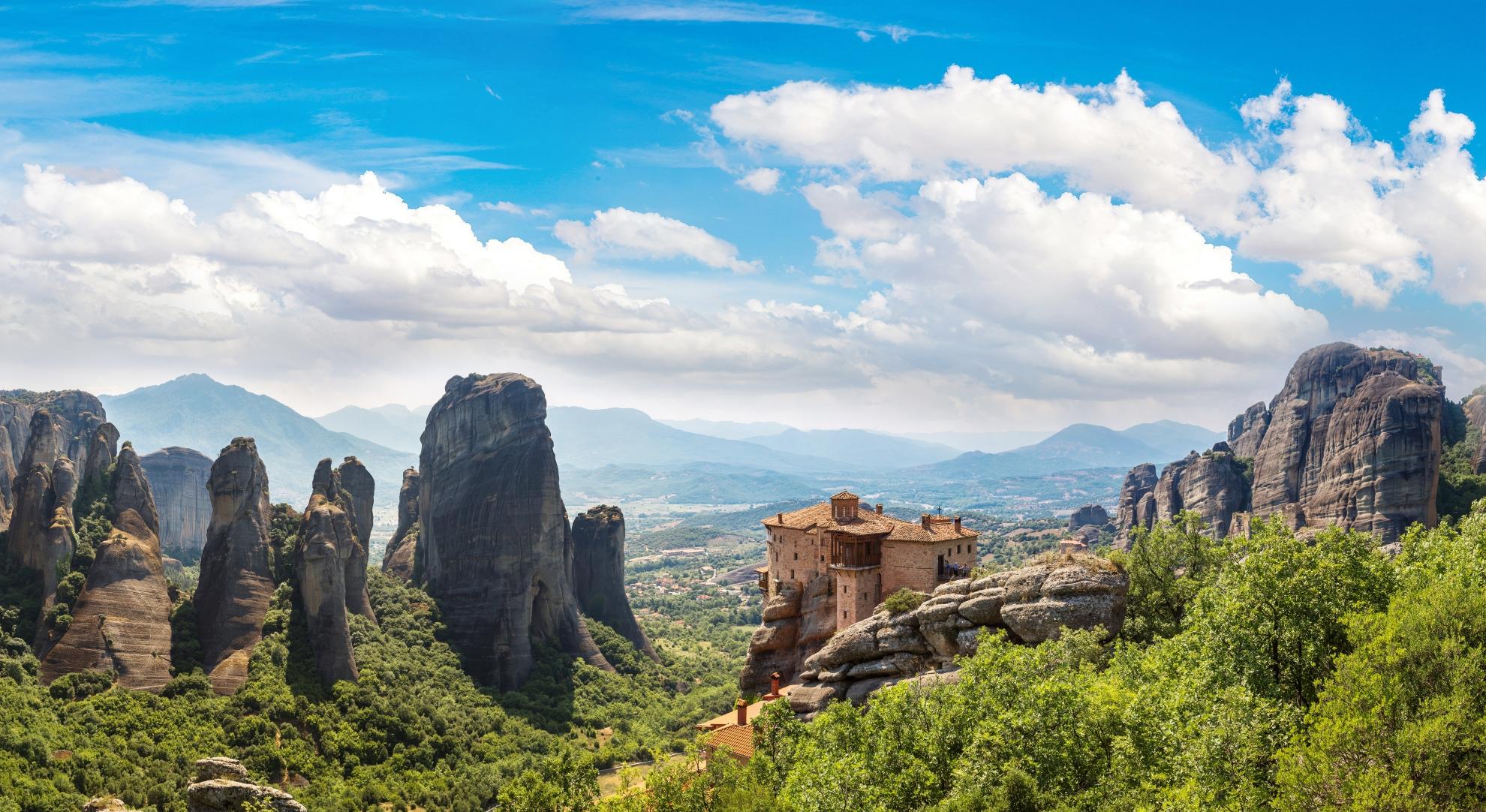
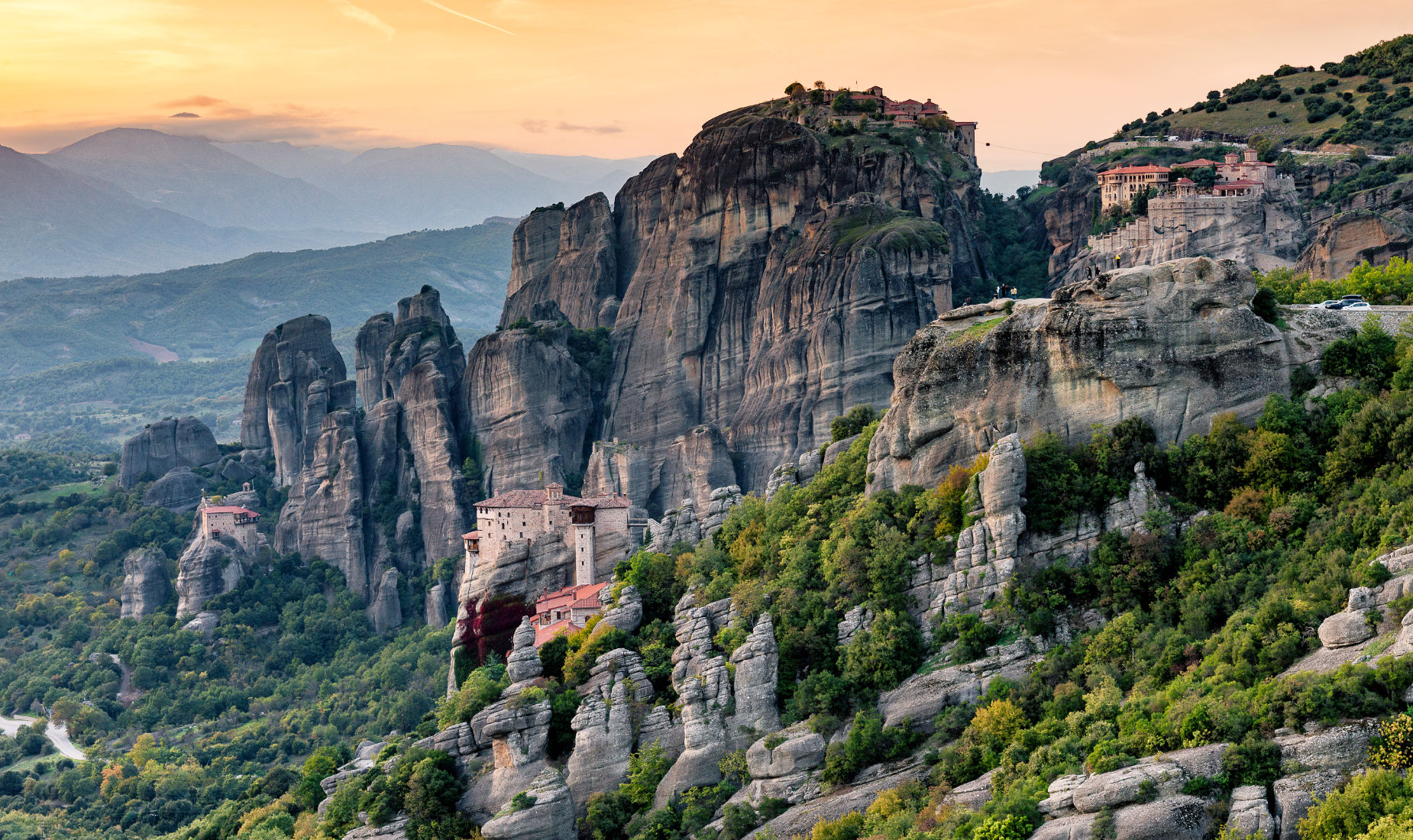
Six monasteries cling to sandstone pillars in Thessaly, some 400 metres above the Peneas valley floor. Monks hauled building materials up rope ladders and wicker baskets from the fourteenth century onwards, establishing Orthodox hermitages that became fully functioning monastic communities by the sixteenth century.
The rock formations themselves formed 60 million years ago when the Aegean receded, leaving river-eroded limestone towers that geologists call "towers in the air."
UNESCO inscribed Meteora in 1988, recognising both the natural geology and the Byzantine frescoes preserved inside the katholika. The Great Meteoron, founded in 1356, houses a vaulted refectory and a wood-carved iconostasis gilded in the 1790s. Varlaam monastery, consecrated in 1542, displays frescoes by the Theban painter Frangos Katelanos. Roussanou, perched on a single pillar, became a convent in 1988 and now holds twenty nuns. Agios Nikolaos Anapafsas, smallest of the accessible six, climbs three storeys inside a vertical rock column, each chapel dedicated to a different saint.
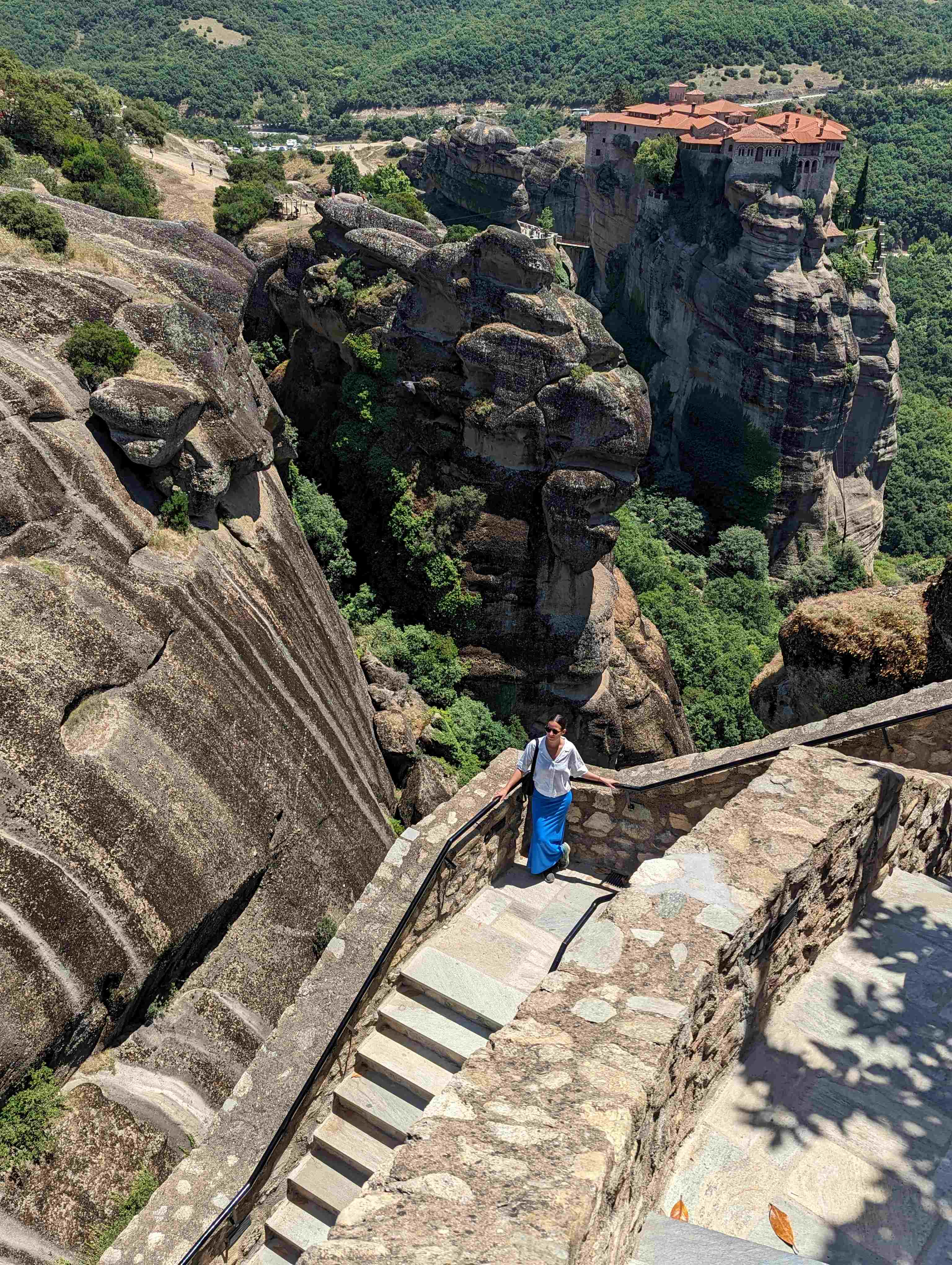
The Athens to Meteora coach route crosses Boeotia and western Thessaly, passing Lamia and Trikala before reaching Kalabaka. Most excursions allocate three hours among the monasteries, visiting two or three depending on monastic schedules and conservation closures. A €5 conservation fee applies per person per monastery, paid at each entrance. Steps carved into the rock connect parking areas to monastery gates—300 steps at Varlaam, 143 at Great Meteoron. Dress codes require covered shoulders and knees; wrap skirts are provided at entrances for visitors in shorts.
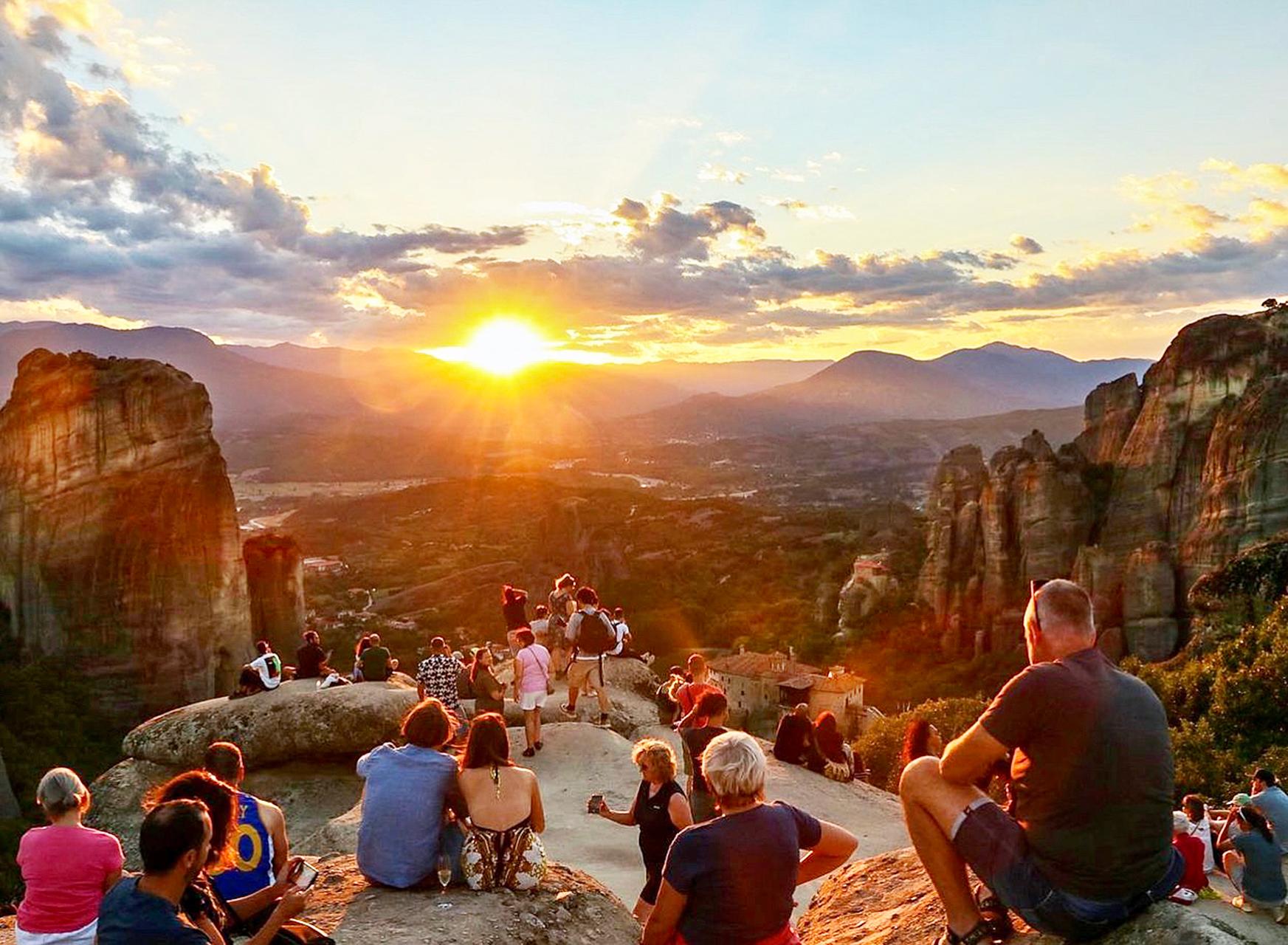
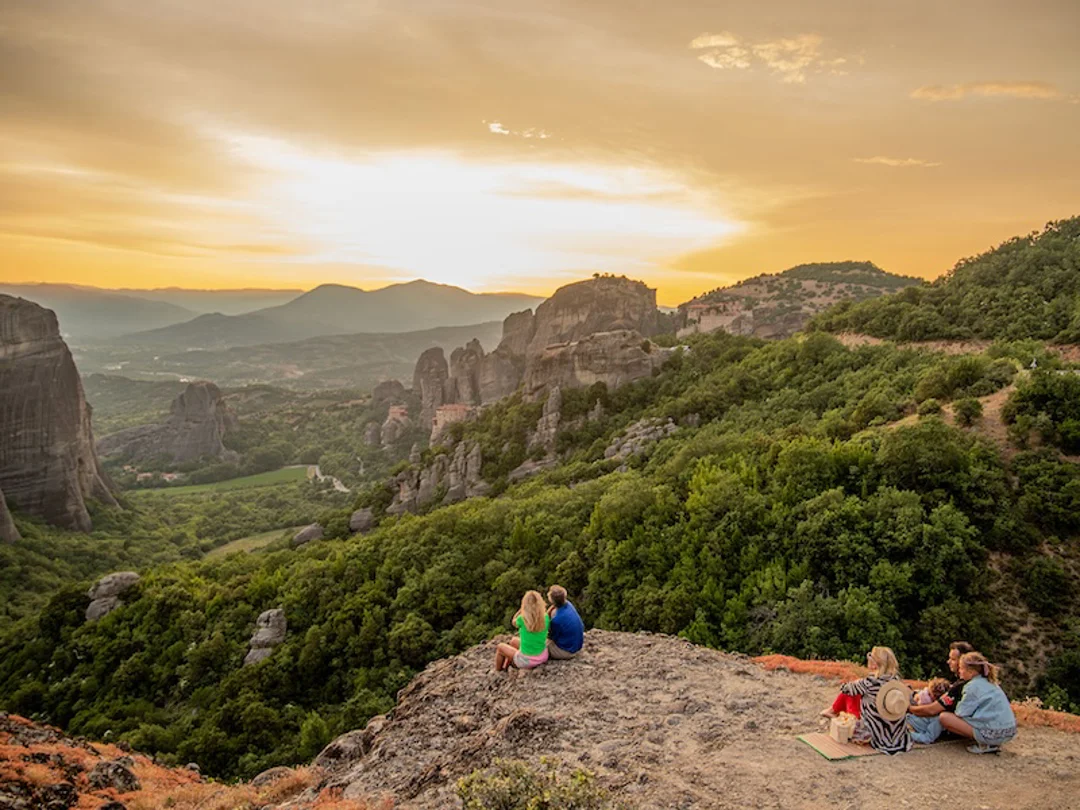
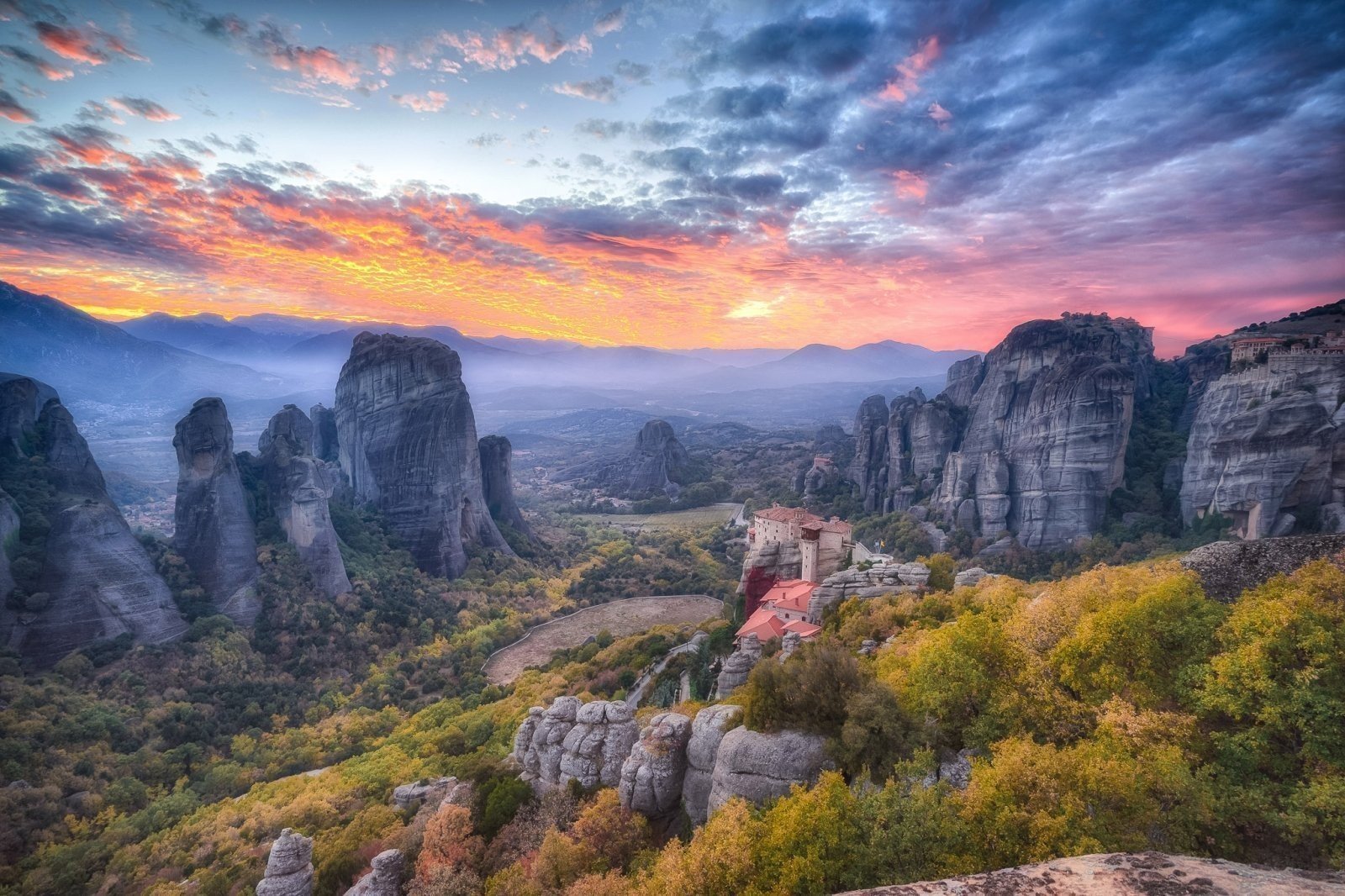
Meteora's geology draws rock climbers and geologists as much as pilgrims. The conglomerate stone—compressed river pebbles and sand—erodes unevenly, creating overhangs and natural caves that hermits occupied before the first monasteries rose. Sunset turns the towers amber and ochre. Spring wildflowers—Greek anemones, Balkan crocuses—cover the valley floor from March through May.
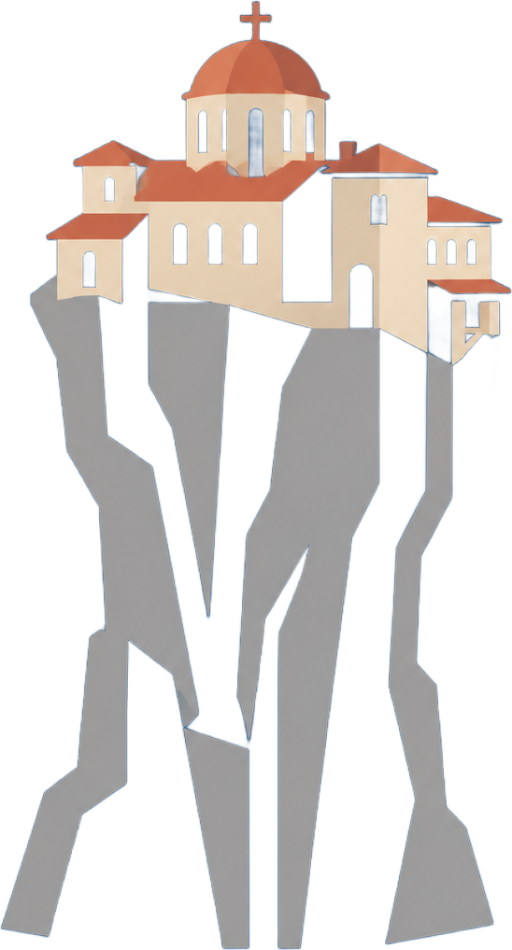
Monks hauled building materials up rope ladders and wicker baskets from the fourteenth century onwards, establishing Orthodox hermitages that became fully functioning monastic communities by the sixteenth century.
Modest attire is mandatory for all visitors entering the monasteries. Men must wear long trousers and covered shoulders, while women must wear skirts that cover the knees and modest tops; wrap-around skirts are often provided at the entrance if required.
Large backpacks and bulky bags are discouraged due to limited space and security protocols. Expect security checks at the main gates of each monastery.
Photography is permitted in the courtyards and exterior areas of the Meteora monasteries. Strictly no photography or video is allowed inside the sacred monastery churches or museums.
Families are welcome, though the steep terrain and steps may be difficult for small children or strollers. Children under 12 typically enter the monasteries free of charge.
Most monasteries involve 300 steps carved into the rock, making them challenging for those with mobility issues. The Monastery of Saint Stephen is the most accessible, as it is reached via a short footbridge.
No food or drink facilities are located inside the monasteries themselves. It is recommended to bring water and snacks for your meteora day trip from athens by bus as options on the rocks are limited.
Opening Hours
09:00–17:00
Address
Meteora, Kalabaka 422 00, Greece
Step count (access)
300
Best arrival window
09:00–10:30
Storage
None provided at monastery sites
Navigation
Follow the paved ring road loop
Full refunds are typically provided for bookings cancelled at least 24 hours prior to the scheduled departure. Please consult your specific tour operator regarding the 5 EUR conservation fee handling.
Recommended time
4-5 hours
A typical meteora day trip from athens by bus covers the essential monastic complexes and panoramic viewpoints. Travelers should allocate sufficient time for the 300 steps required to reach the primary sites, as queues fluctuate depending on local coach arrivals. Planning your meteora day trip from athens by bus tour allows for a balanced pace, though obtaining meteora day trip from athens by bus tickets in advance ensures priority access. For those booking meteora day trip from athens by bus tours, expect transit logistics to dictate the rhythm of your day among these UNESCO world heritage rock formations.
Crowd levels through the day
The monasteries of Meteora rose from a tradition of solitary asceticism that began in the ninth century, when hermits climbed the sandstone pillars to escape worldly distractions and pursue prayer in absolute isolation. These early anchorites carved shallow caves into the rock faces and hauled provisions up by rope and basket, establishing a fragile foothold in one of the most inaccessible landscapes in Greece. By the eleventh century, a loose community of ascetics had formed, though no permanent structures yet crowned the summits. Construction of the first true monastery began around 1344, when the monk Athanasios Koinovitis fled Mount Athos during Serbian raids and ascended the highest pillar, founding what became the Great Meteoron. He engineered a rudimentary windlass system to lift building materials—limestone blocks, timber beams, ceramic tiles—up sheer cliffs exceeding three hundred meters. Within two decades, Athanasios and his followers had completed a katholikon, refectory, and defensive tower, establishing a blueprint that twenty-three additional monasteries would replicate over the next two centuries. The construction required masons and laborers to work suspended on rope platforms, a technique that claimed numerous lives and left the sites virtually impregnable to Ottoman forces sweeping through Thessaly. The monasteries reached their zenith in the sixteenth century, when political instability across the Byzantine successor states drove monks, scholars, and artisans to Meteora's summits. Monastic scriptoria produced illuminated manuscripts that preserved theological and scientific texts through centuries of upheaval. Yet decline began in the seventeenth century as depopulation and economic hardship reduced the communities. By 1921, steps were finally cut into the rock, ending centuries of rope-and-net access. Today, six monasteries remain active, their frescoed interiors and vertiginous perches drawing visitors who book a meteora day trip from athens by bus to witness the improbable fusion of faith and engineering that defied gravity and time.
Hermits inhabit natural caves in the Meteora rock pillars, beginning centuries of eremitic tradition.
Monk Athanasios Koinovitis founds the Great Meteoron monastery atop the highest pillar, using rope-and-pulley systems to lift materials.
Twenty-four monasteries are constructed on the summits, accessible only by rope ladders and nets.
Monastic communities flourish under Ottoman rule, producing illuminated manuscripts and hosting refugee scholars.
Stone stairways are carved into the cliffs, replacing rope access and opening the site to pilgrims and tourists.
UNESCO designates Meteora a World Heritage Site, recognizing its unique blend of natural and cultural significance.
Six active monasteries preserve Byzantine frescoes and monastic life, welcoming travelers on meteora day trip from athens by bus tours.
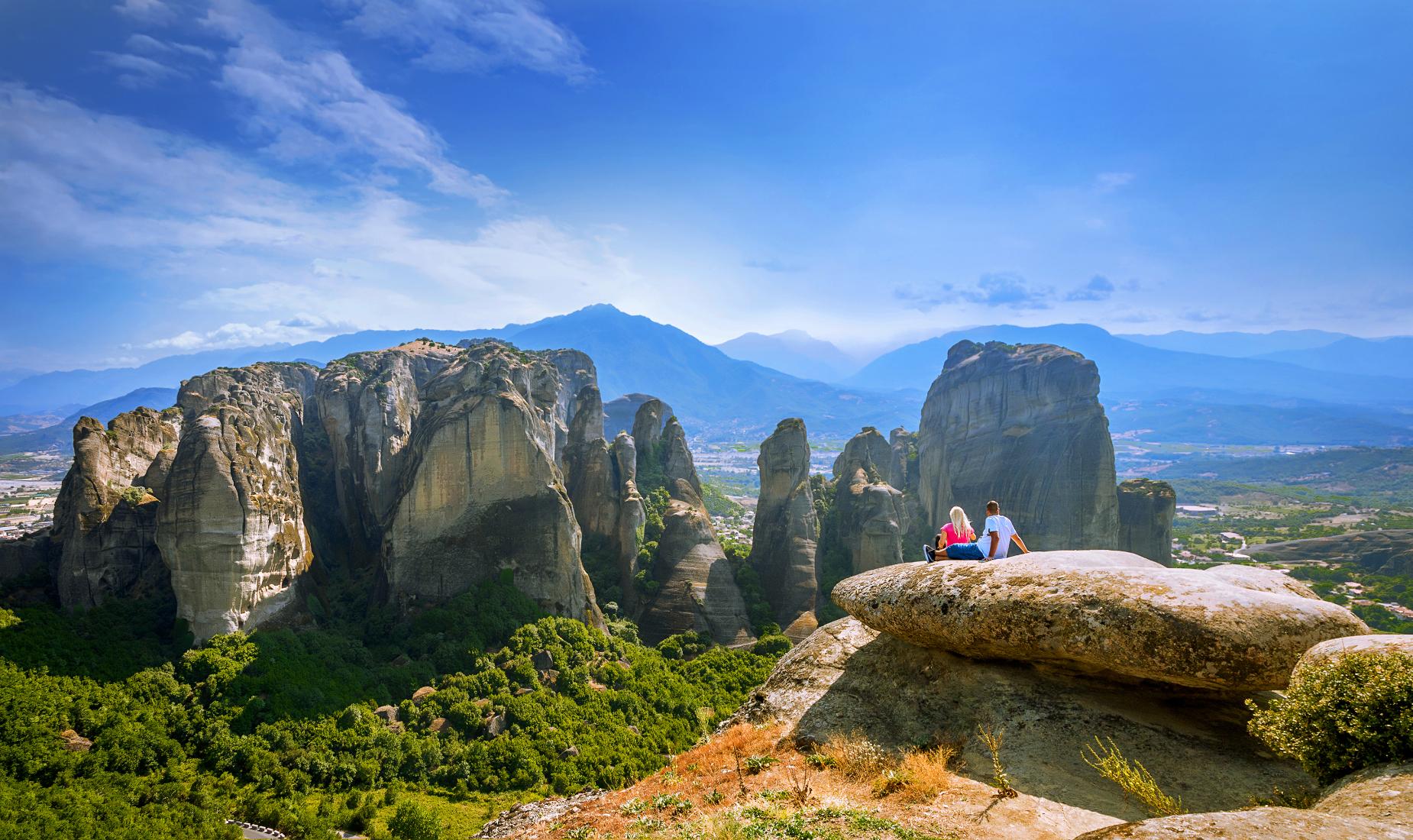
This location offers a wide panoramic view of the rock pillars and the surrounding landscape. Position your camera toward the monasteries to capture the sedimentary rock formations as they glow during the late afternoon. Best accessed via the trail from the main road.
The stone balcony provides a high-angle perspective looking down into the valley and across to the neighboring monastic structures. Arrive early to secure space against the railing for clear shots of the massive sandstone cliffs. Best arrival window: 09:00–10:30.
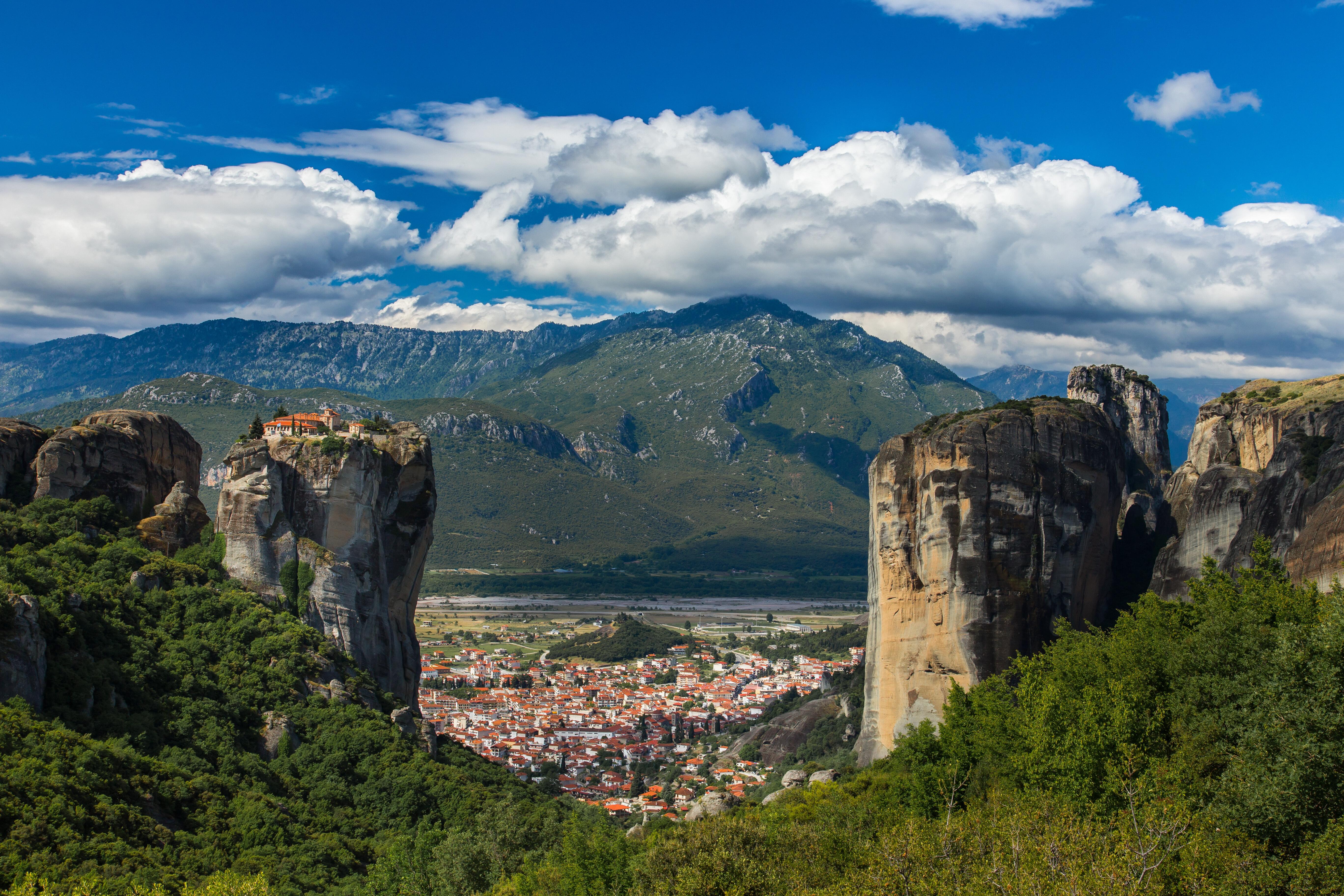
This spot is frequently visited by those on a meteora day trip from athens by bus as it provides the classic profile view of the Holy Trinity Monastery. Stand near the roadside shoulder to align the monastery with the deep ravine below for a dramatic composition.
From this lower terrace, photographers can focus on the architectural details of the monastery and its integration into the vertical rock face. It serves as an accessible stop for anyone booking meteora day trip from athens by bus tours to document the Byzantine construction.
This designated area allows for unobstructed views of the cluster of monasteries perched atop the stone pinnacles. It is a preferred vantage point for visitors securing meteora day trip from athens by bus tickets to capture the scale of these UNESCO heritage sites.
A meteora day trip from athens by bus can be a memorable journey for children who are fascinated by the storybook appearance of these towering stone pillars. Balancing the physical challenge of the site with well-chosen, manageable stops ensures a positive experience for your family.
Strollers cannot be used on the trails or stairways, so choose a child carrier for younger ones. St. Stephen is the most accessible monastery, as it is reached via a flat footbridge rather than the 300 steps found at other sites.
Avoid a full checklist by focusing on two monasteries to keep energy high. Arriving within the 09:00–10:30 window helps you beat the main coach tour crowds and provides a more peaceful atmosphere.
Bring enough water and snacks, as options are limited once you start the climb toward the monasteries. Ensure everyone follows the strict dress code by wearing long trousers or skirts and covering shoulders to avoid being refused entry.
Consider a meteora day trip from athens by bus tour that offers flexibility, as these often include stops at scenic viewpoints where kids can safely enjoy the landscape. If you prefer to plan your own route, remember that many sites require a steep walk, so prioritize comfortable footwear for all ages.
Keep in mind that monastery tickets are 5 EUR per person, and it is best to carry cash for these payments. Pre-booking your meteora day trip from athens by bus tickets allows you to focus on the experience without managing complex transportation transitions on the day.
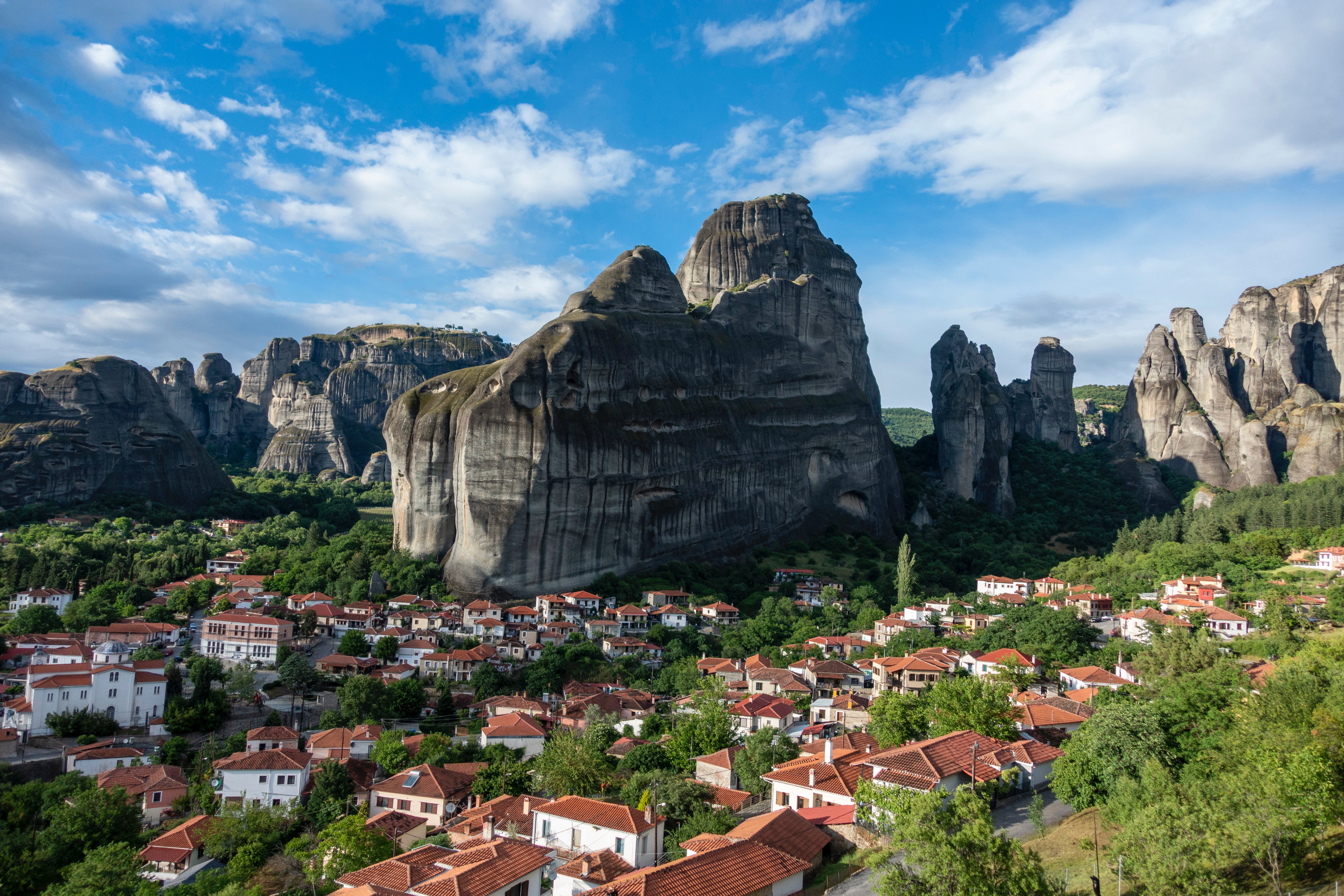
Finding quality meals while on a meteora day trip from athens by bus is best managed in Kalabaka, where diverse eateries serve traditional Greek fare. Visitors should plan their dining around the monastery gate hours, as limited food options exist near the rocky pinnacles.
Located in the town center, this spot offers hearty moussaka and grilled meats perfect for groups using meteora day trip from athens by bus tours. It provides a reliable atmosphere for a sit-down lunch after your ascent.
This restaurant offers sweeping views of the sandstone cliffs, ideal for those who have secured their meteora day trip from athens by bus tickets in advance. It features authentic local dishes like lamb with hilopites.
A welcoming venue in Kalabaka suitable for travelers on a meteora day trip from athens by bus tour needing a quick, affordable meal. Their menu includes varied mezedes and fresh salads that suit a tight itinerary.
Everything you need to know for your journey
All monasteries are open daily from 09:00–17:00.
Yes, modest dress is required for all visitors, including long skirts for women and long trousers for men.
Yes, the entrance fee is 5 EUR per person, per monastery.
Most sites involve 300 steps, though Saint Stephen is accessible via a bridge.
Arriving between 09:00–10:30 is recommended to avoid the busiest coach crowds.
Photography is allowed in courtyards but prohibited inside the churches.
Bring cash for entrance fees, modest attire, and comfortable walking shoes.
You can expect up to 300 steps to access many of the cliff-top sites.
Drones and professional tripods are generally restricted at the sites.
Join thousands of happy travelers who have discovered this incredible experience
Book Your Experience Now